
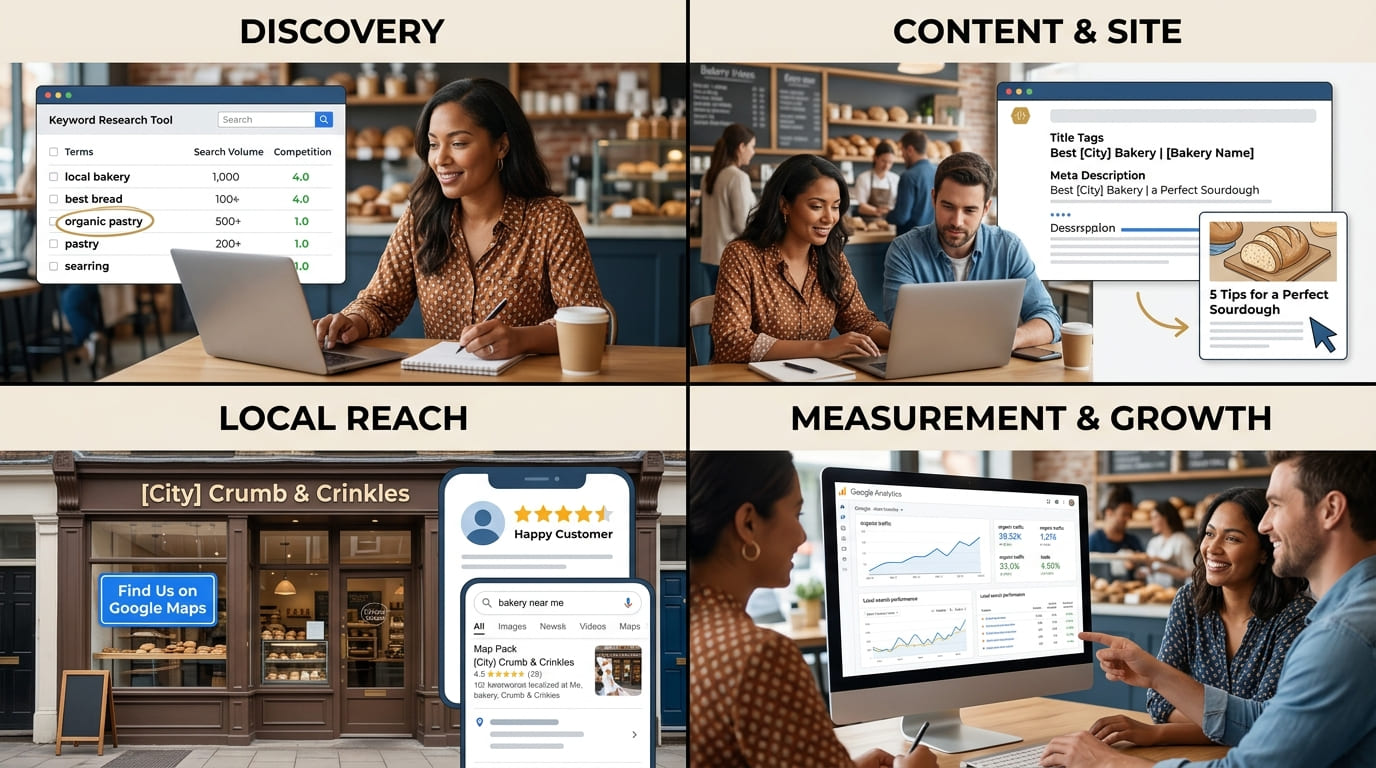
In the rapidly evolving digital landscape of 2026, the question for local entrepreneurs is no longer if they should invest in search engine optimization, but how they can do it efficiently. SEO for small business has shifted from a technical luxury to a survival necessity. As AI-driven search results and personalized discovery engines become the norm, small businesses have a unique advantage: the ability to provide hyper-local, authentic, and specialized content that massive corporations simply cannot replicate.
Many small business owners feel overwhelmed by the technical jargon of SEO, assuming it requires a six-figure budget or a team of developers. This guide is designed to debunk those myths. Whether you are a local plumber, a boutique coffee shop owner, or a specialized consultant, you can outrank competitors by focusing on high-impact, low-cost strategies. In 2026, Google’s algorithms prioritize “Experience, Expertise, Authoritativeness, and Trustworthiness” (E-E-A-T) more than ever. This means your real-world reputation is your greatest SEO asset.

Why SEO is the Growth Engine for Small Businesses
To understand why SEO for small business is so critical, we must look at the difference between search intent and passive browsing. When someone sees an ad on social media, they are likely scrolling for entertainment. However, when someone types “emergency roofer in [City]” or “best organic dog food,” they are expressing high-intent. They have a problem, and they are looking for a solution right now.
Organic traffic—the visitors who find you through unpaid search results—is often the highest-quality traffic a business can receive. Unlike Search Engine Marketing (SEM) or Pay-Per-Click (PPC) advertising, which stops the moment you stop paying, SEO is an investment in a digital asset that grows over time. In 2025 and 2024, we saw the cost of digital advertising skyrocket due to increased competition. Small businesses that relied solely on ads saw their margins shrink. Conversely, those that built a solid SEO foundation enjoyed a steady stream of “free” leads.
You don’t need a massive budget to win. In the 2026 search environment, search engines are increasingly sophisticated at identifying “micro-relevance.” If you provide the most specific, helpful answer to a user’s query in your local area, you can beat a national brand with a million-dollar budget. SEO levels the playing field, allowing the “little guy” to occupy the most valuable real estate on the internet: the first page of Google.
The Core Pillars of Small Business SEO
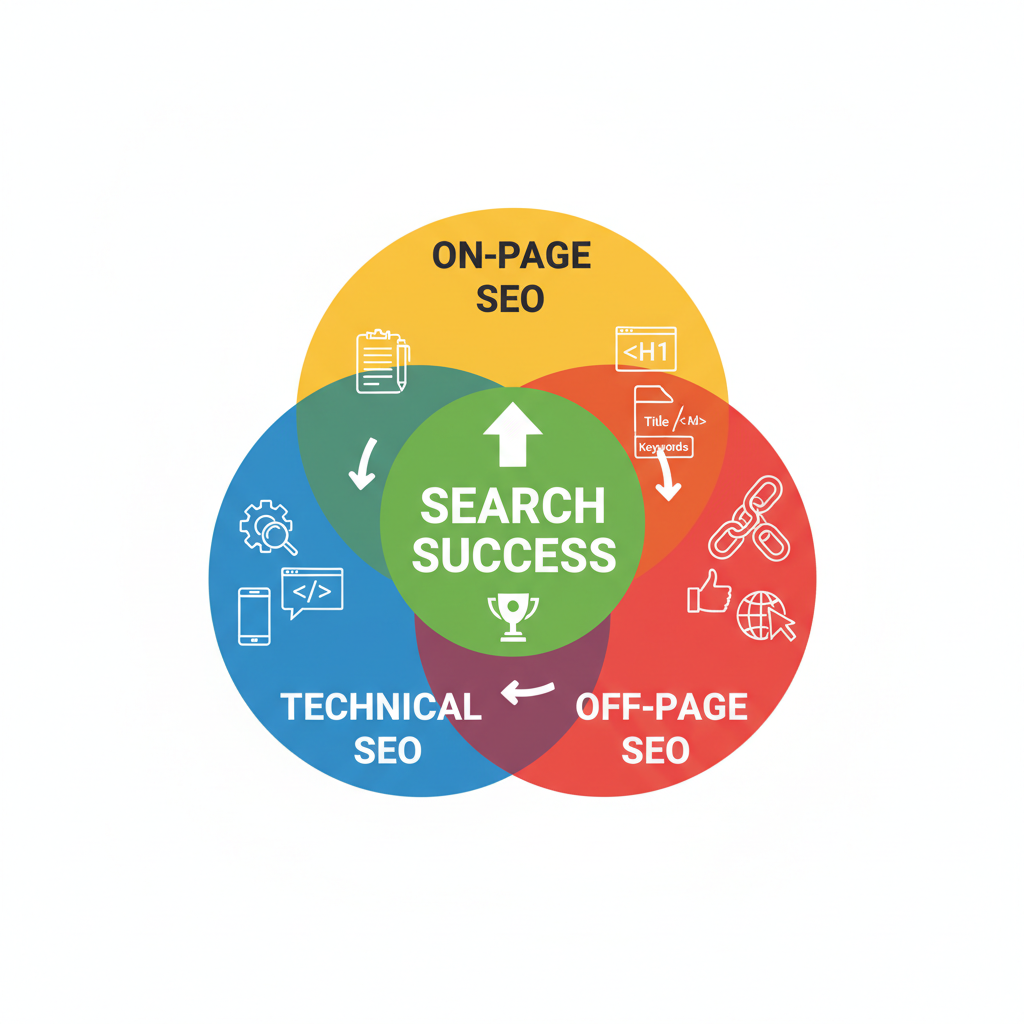
Effective SEO is built on three foundational pillars. If one is missing, the others cannot hold the weight of your rankings.
Technical SEO: Building a Solid Foundation
Technical SEO is about ensuring that search engines can find, crawl, and index your website without issues. In 2026, user experience (UX) is a primary ranking factor. If your site is slow or difficult to navigate on a phone, you will be penalized.
- Mobile-First Indexing: Your website must be designed for mobile users first. Most local searches happen on smartphones while people are on the go.
- Site Speed: With the 2025 update to Core Web Vitals, page load speed is a non-negotiable. Use tools like PageSpeed Insights to ensure your site loads in under two seconds.
- HTTPS Security: A secure site is a trusted site. Ensure your SSL certificate is active.
- XML Sitemaps: This is a roadmap of your site that you submit to Google Search Console (GSC) to help it understand your structure.
On-Page SEO: Content that Solves Problems
On-page SEO refers to the content on your pages and how it is structured. In 2026, the focus has shifted from “keyword stuffing” to “topic authority.”
- Keyword Placement: Your primary keyword, like “SEO for small business,” should appear in your H1 header, the first 100 words of your content, and your meta descriptions.
- Search Intent: Every page should answer a specific question. Are they looking for information (blog post) or are they ready to buy (service page)?
- Semantic SEO: Include related terms and entities. If you are a florist, your content should naturally include words like “delivery,” “bouquets,” “vases,” and specific flower names.
Off-Page SEO: Building Trust and Authority
Off-page SEO is primarily about backlinks—links from other websites to yours. Think of a backlink as a “vote of confidence.”
- Quality over Quantity: One link from a local Chamber of Commerce or a reputable industry blog is worth more than 100 links from low-quality, irrelevant sites.
- Digital PR: Engaging with local news outlets or sponsoring community events can lead to high-authority mentions and links.
- Brand Mentions: Even if a site doesn’t link to you, a mention of your business name across the web helps Google verify your existence and reputation.
Local SEO: The Secret Weapon for Small Brands
For most small businesses, “Local SEO” is where the real money is made. This is the practice of optimizing your online presence to attract more business from relevant local searches. When someone searches for a service “near me,” Google triggers the “Local Map Pack”—the three business listings that appear alongside a map.
Google Business Profile (GBP): Your GBP is arguably more important than your website for local discovery. In 2026, Google has added features allowing for direct booking, AI-driven messaging, and expanded video showcases within the profile.
- Claim and Verify: Ensure you own your listing.
- NAP Consistency: Your Name, Address, and Phone number must be identical across the web (your site, GBP, Yelp, etc.).
- Encourage Reviews: High-rated reviews with text and photos are a massive ranking signal. Respond to every review—even the negative ones—to show engagement.
Local Citations: These are mentions of your business on local directories like Yellow Pages, Angie’s List, or niche-specific directories. They help confirm your location to search engines.
Hyper-Local Content: Write about your community. If you are a real estate agent, don’t just write about “buying a home.” Write about “The 5 best neighborhoods in [City] for young families in 2026.” This proves to Google that you are an authority in that specific geographic area.
Step-by-Step: How to Get Started with SEO Today
You don’t need to do everything at once. Small business owners have limited time, so focusing on high-impact actions is key.
Keyword Research for Limited Resources
In 2026, keyword research is about finding the “long-tail” keywords—longer, more specific phrases that are easier to rank for.
- Use Google Search Console (GSC): This free tool shows you which keywords people are already using to find you. Optimize those pages to move from page two to page one.
- Answer the Public: Look for questions people are asking. “How much does a [Service] cost in 2026?” is a great keyword for a blog post.
- Analyze Competitors: Look at local competitors who are ranking well. What topics are they covering? Don’t copy them, but use their success as a roadmap for what your audience wants.
Content Creation: Quality over Quantity
Stop trying to post every day. A single, exhaustive, high-quality article that truly helps a customer is better than fifty 300-word fluff pieces.
- The FAQ Method: What are the top 10 questions your customers ask you in person? Create one dedicated page or blog post for each of those questions.
- Show Your Work: Case studies and “Before and After” galleries are powerful. They provide unique images and text that competitors can’t replicate, which is highly valued in the age of AI-generated content.
- Update Regularly: Information changes. A guide written in 2024 needs to be updated for 2026 to remain relevant.
Common SEO Mistakes Small Businesses Make
The road to search success is paved with businesses that took shortcuts. Avoid these “Black Hat” traps and strategic errors:
- Buying Backlinks: In 2025, Google’s “SpamBrain” AI became incredibly efficient at detecting and penalizing sites that buy link packages. It can lead to a permanent de-indexing of your site.
- Keyword Stuffing: Writing for robots rather than humans. If your text sounds repetitive and unnatural, users will leave, and your “bounce rate” will hurt your rankings.
- Ignoring Mobile Users: Many owners check their site on a desktop and think it looks great, oblivious to the fact that their “Order Now” button is unclickable on a smartphone.
- Expectation of Instant Results: SEO is a marathon. Typically, it takes 3 to 6 months to see significant movement. Giving up after 30 days is the most common reason small businesses fail at SEO.
- Ghosting Your Google Business Profile: If you don’t post updates or photos to your GBP, it looks like your business might be closed. Search engines prefer active, thriving entities.
Free Tools to Measure Your Success
You cannot manage what you do not measure. Fortunately, the best tools for SEO for small business are free.
- Google Search Console (GSC): The most important tool in your arsenal. It tells you exactly how Google sees your site, which pages are indexed, and which keywords are driving clicks.
- Google Analytics 4 (GA4): This helps you understand user behavior. Where do they come from? How long do they stay? Which pages lead to a phone call or a contact form submission?
- Google PageSpeed Insights: Essential for monitoring your site’s performance and mobile-friendliness.
- Canva: While not a “ranking tool,” it is essential for creating the high-quality, original images and infographics that boost user engagement and earn links.
- Bing Webmaster Tools: Do not ignore Bing. With its integration of OpenAI technology, Bing’s market share has grown significantly by 2026.
The DIY Realistic Approach: The No-BS Guide
Let’s be honest: you have a business to run. You can’t spend 40 hours a week on SEO. Most corporate advice tells you to “create a comprehensive backlink outreach strategy.” For a small business owner, that is unrealistic.
The “Pro-Tip” Strategy for 2026:
Instead of trying to get links from The New York Times, focus on “Local Proximity Links.” Ask the local bakery you supply to link to your site on their “Partners” page. Sponsor a Little League team and get a link from their “Sponsors” section. These are easy to get, highly relevant, and signal to Google exactly where you are located.
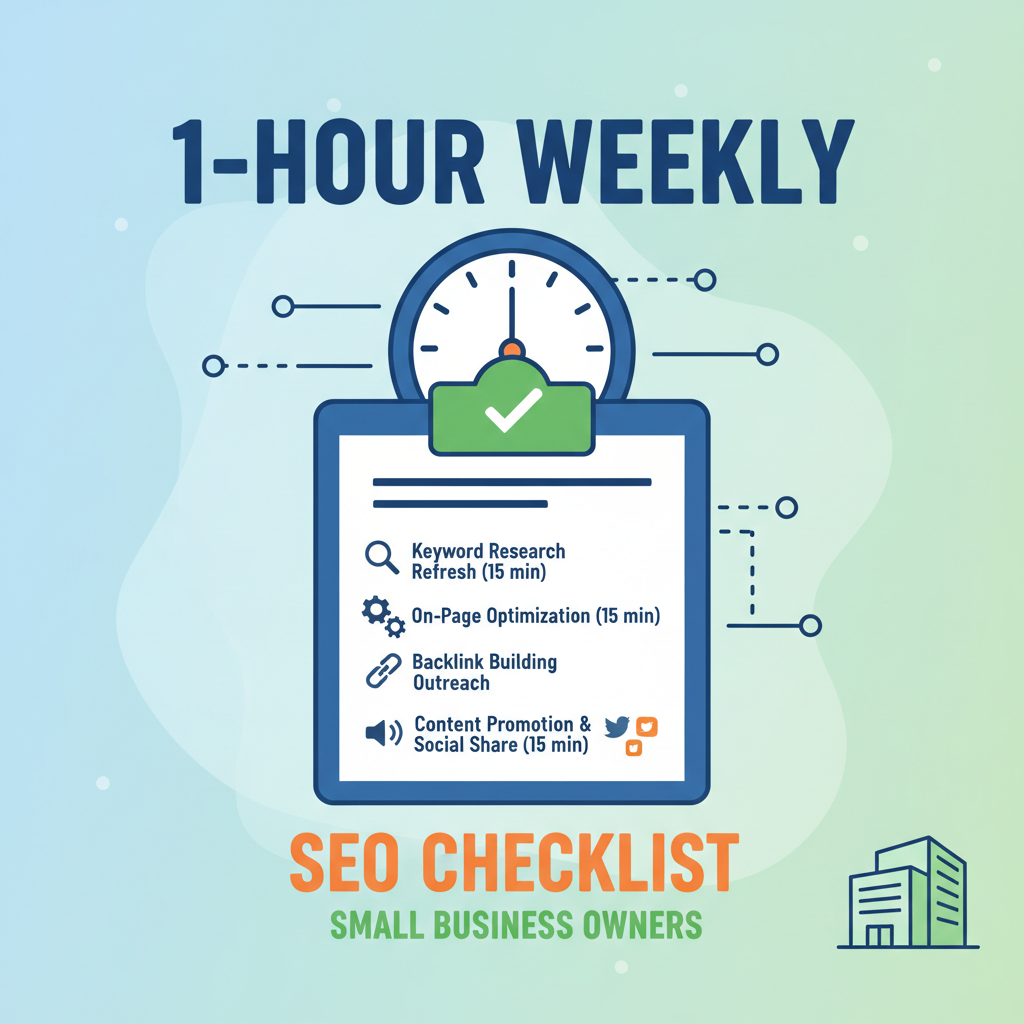
The 1-Hour Weekly SEO Maintenance Checklist:
- 15 Mins: Respond to any new Google Reviews and post one photo of your work/office to your Google Business Profile.
- 30 Mins: Write or update one “FAQ” section on your website based on a question a customer asked that week.
- 15 Mins: Check Google Search Console for any “Critical Errors” (red flags) that might stop your site from being seen.
By focusing on these “micro-wins,” you build a compounding advantage that eventually becomes an insurmountable lead over competitors who are looking for “quick fixes.”
Frequently Asked Questions (FAQ)
How long does it take for a small business to see SEO results?
In 2026, most small businesses start seeing initial improvements in rankings within 3 to 4 months. However, significant increases in leads and revenue usually take 6 to 12 months of consistent effort. SEO is a long-term play, but once the momentum starts, it is much cheaper to maintain than paid ads.
Can I do SEO myself or should I hire an agency?
You can absolutely handle the basics of SEO yourself, especially keyword research and Google Business Profile management. However, if your website has technical issues or if you are in a highly competitive market (like “Lawyers in NYC”), a specialist may be necessary. If you do hire an agency, ensure they have 2025-2026 case studies and aren’t using outdated tactics from five years ago.
What is the difference between SEO and SEM (PPC)?
SEO (Search Engine Optimization) focuses on “earning” traffic through organic results. SEM (Search Engine Marketing) or PPC (Pay-Per-Click) involves “buying” traffic through ads. SEO has a higher initial effort but a lower long-term cost, while SEM provides instant results but stops the moment you stop paying. A healthy marketing strategy in 2026 often uses both.
Is SEO worth it for a local business with only one location?
Yes, it is arguably more important for single-location businesses. Google’s local search algorithms are designed to help small, local entities compete with national chains by prioritizing proximity and local relevance. SEO ensures that when someone in your neighborhood needs what you sell, they find you first.
Does social media help my SEO?
While social media likes and shares aren’t direct ranking factors, they help SEO indirectly. Social media drives traffic to your site, increases brand awareness, and can lead to backlinks if people share your content. In 2026, search engines also frequently show social media profiles (like TikTok or Instagram) in the search results for brand names.
How much does SEO for a small business cost?
If you do it yourself, it costs $0 and a few hours of your time per week. If you hire a professional for a one-time setup or monthly maintenance, costs in 2026 typically range from $1,000 to $3,500 per month depending on the competitiveness of your industry.
What is “Search Generative Experience” (SGE) and does it affect small businesses?
SGE is Google’s AI-powered search result that summarizes information. For small businesses, the key is to be “cite-worthy.” By providing specific, data-backed, or experience-based information, your business is more likely to be featured as a source in the AI’s answer, which can drive significant high-authority traffic.
Conclusion: Start Small, Think Big
SEO for small business in 2026 is no longer about “tricking” the search engine. It is about being the most helpful, most transparent, and most present option for your local community. By securing your technical foundation, creating content that answers real questions, and dominating the local map pack, you create a marketing engine that works for you 24 hours a day.
The biggest mistake you can make is waiting. Your competitors are likely already building their digital authority. Start today by claiming your Google Business Profile and answering just one customer question on your blog. Small, consistent steps lead to page-one results.
Ready to grow your local presence? Start by auditing your current site with Google Search Console and identifying your top three growth opportunities today. If you need help, look for a local SEO partner who understands the specific needs of the 2026 small business landscape.
Leave a Reply