

Most companies still create content as if Google only needed a long page to rank.
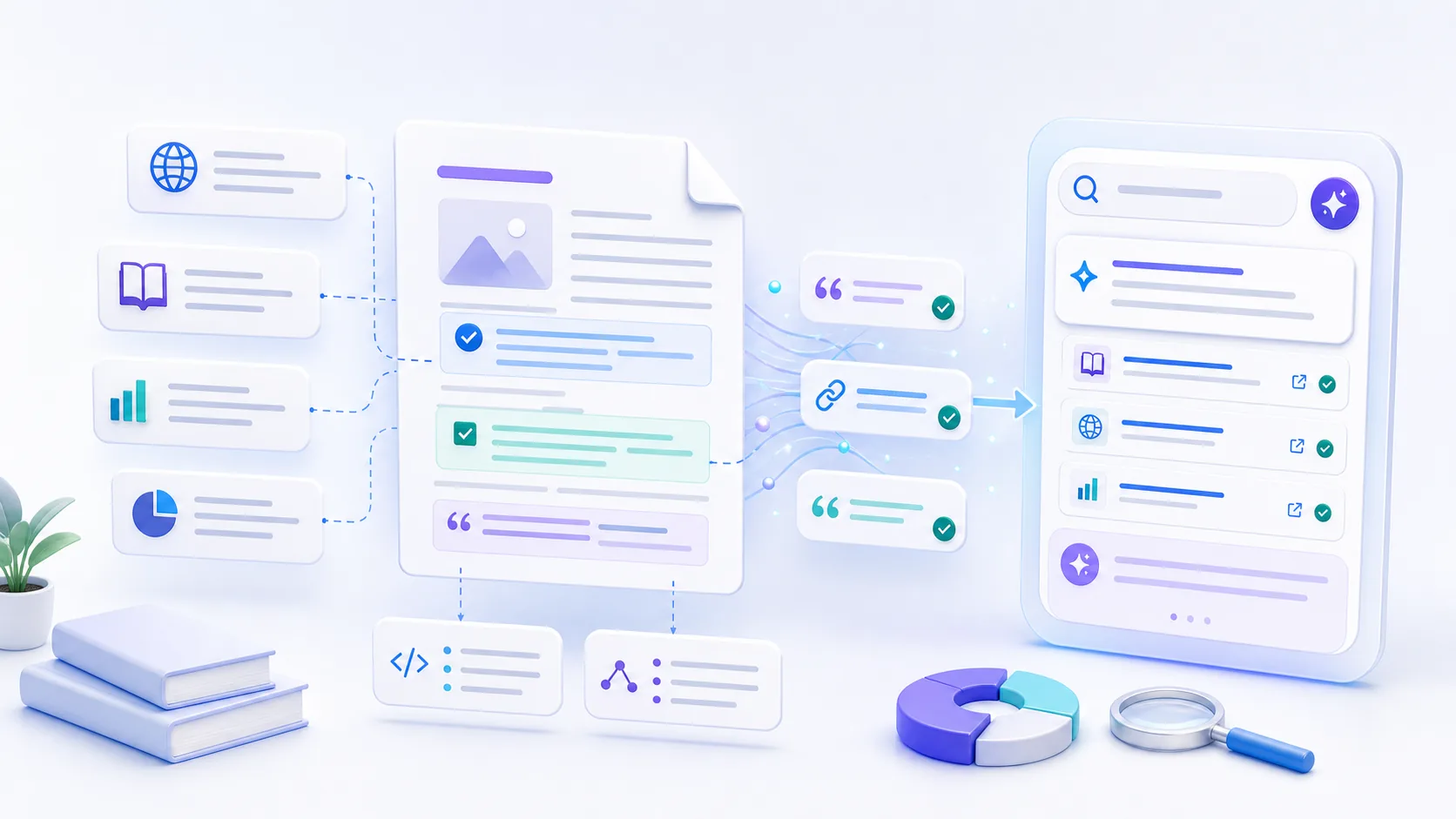
Search is changing. Google AI Mode, AI Overviews, ChatGPT, Perplexity, and other systems do not only list URLs. They summarize, compare, select sources, and cite pages when they believe a result provides a clear and verifiable answer.
That does not mean classic SEO is dead. It means content has to do two jobs at once: rank in search engines and be clear, reliable, and structured enough for AI systems to use as a source.
What it really means for AI to cite your content
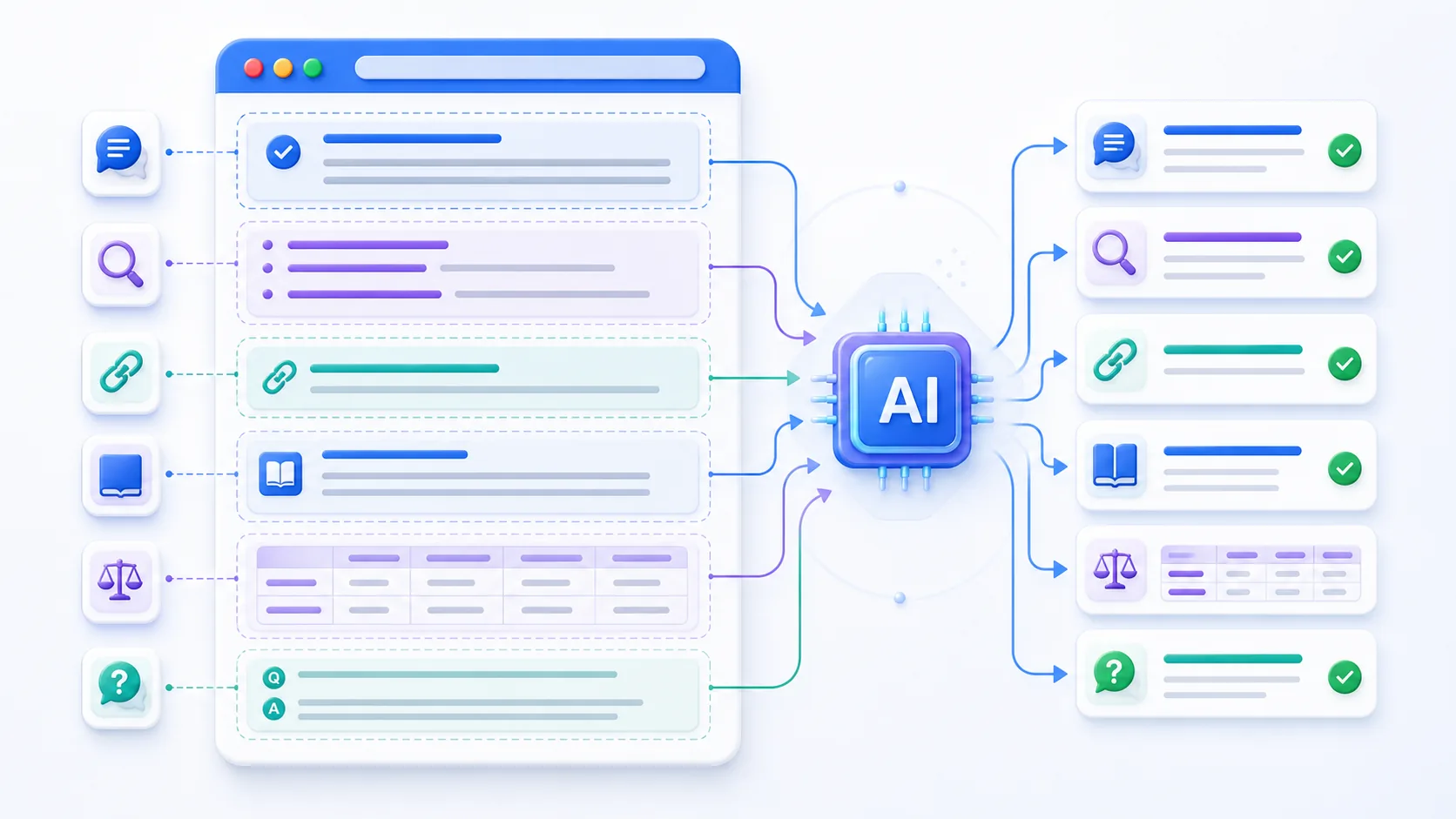
When an AI system cites or uses a page as a source, it is usually not rewarding the longest article. It is looking for an answer that can be extracted, checked, and explained with relatively low risk.
That favors pages with clear definitions, ordered steps, verifiable facts, concrete examples, and visible trust signals. It also favors content that is not ambiguous: who says it, when it was updated, what experience supports it, and which part answers the exact question.
Google explains that its AI experiences in Search may show links so users can explore the web more deeply. That changes the question from only “how do I rank?” to “why should a system choose my page as a useful source?”.
Start with a direct answer that can be extracted
Citable content is not content full of warm-up paragraphs. It should answer the main question clearly and early.
If the topic is “how to create content AI can cite,” the page should quickly explain that AI systems need a clear answer, verifiable evidence, easy-to-parse structure, recognizable authorship, updated facts, and signals that connect the page to a real entity or brand.
You can expand, qualify, and explain after that. But if the basic answer is buried in paragraph 17, you are making the system work too hard.
Add proof, sources, and first-party experience

Citable content needs more than a well-written opinion. It needs proof.
Proof can be first-party data, a screenshot, an experiment, an audit, a client case, a real comparison, a methodology, or professional experience explained in detail. It can also be supported by reliable external sources when they add context.
The difference is that sources should not be decoration. A source should help verify an important claim. If you link to Google documentation on structured data, do it because your point depends on that documentation, not because it looks authoritative.
Structure the page so it is easy to understand
AI systems work better when information is organized. That does not mean writing for robots. It means making the content clearer for every reader.
Use specific headings, lists when there are steps, tables when comparing options, FAQs when answering concrete questions, and short summary blocks when closing a complex section.
Avoid long paragraphs that mix definition, opinion, example, and sales copy in the same block. AI can process messy text, but clean structure reduces interpretation cost.
Use schema to reinforce what the page is
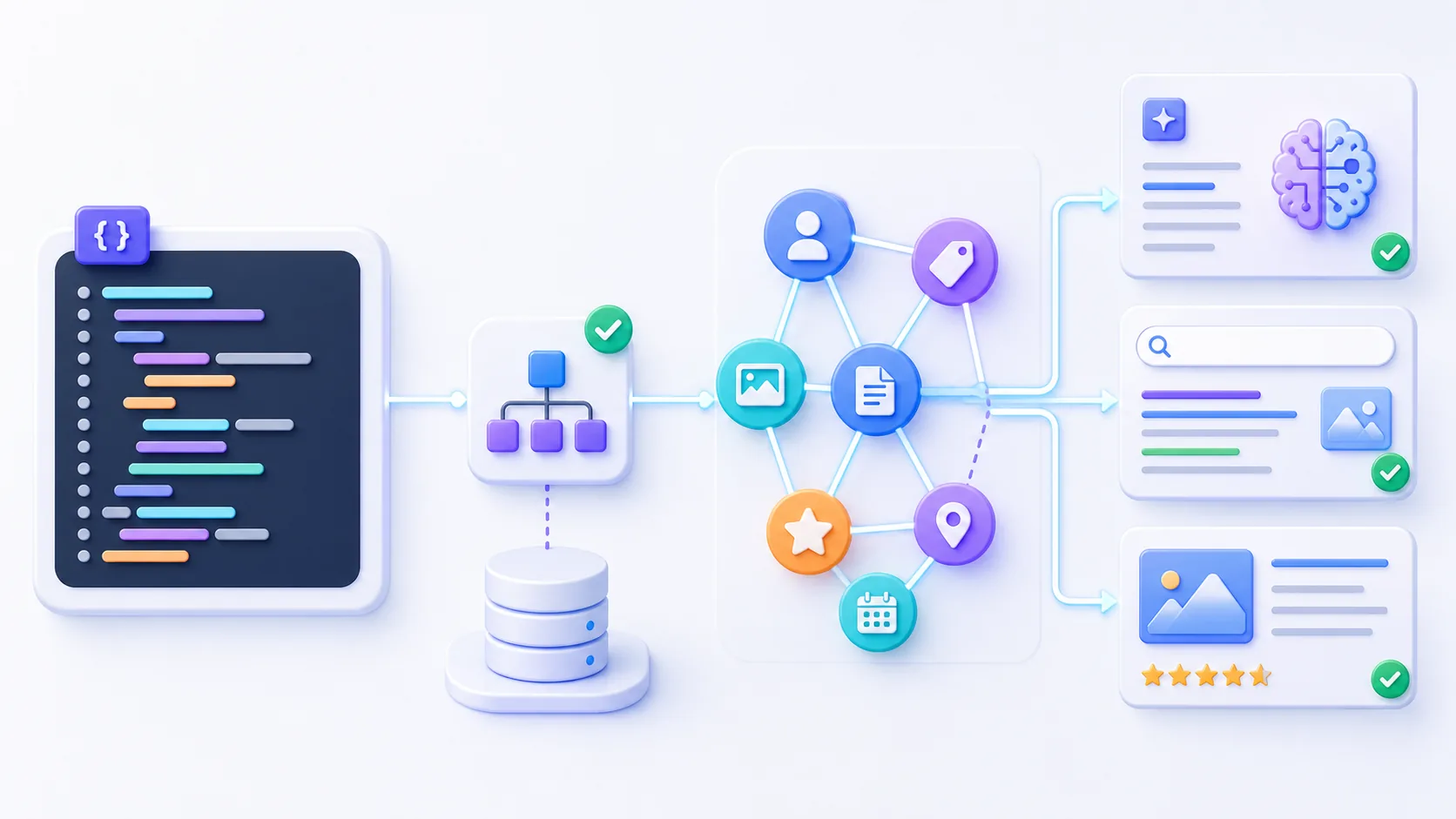
Structured data does not guarantee that AI systems will cite you, but it helps search engines understand the page more clearly.
Google maintains specific documentation for structured data and recommends using the right type for the actual content on the page. For a guide, Article, FAQPage, or HowTo may make sense if the content supports it. For a company, Organization or LocalBusiness. For ecommerce, Product, Offer, AggregateRating, shipping, and return policy when they are real.
The rule is simple: do not use schema to pretend the page contains something it does not. Use schema to clarify what already exists.
Create comparisons, alternatives, and decision criteria
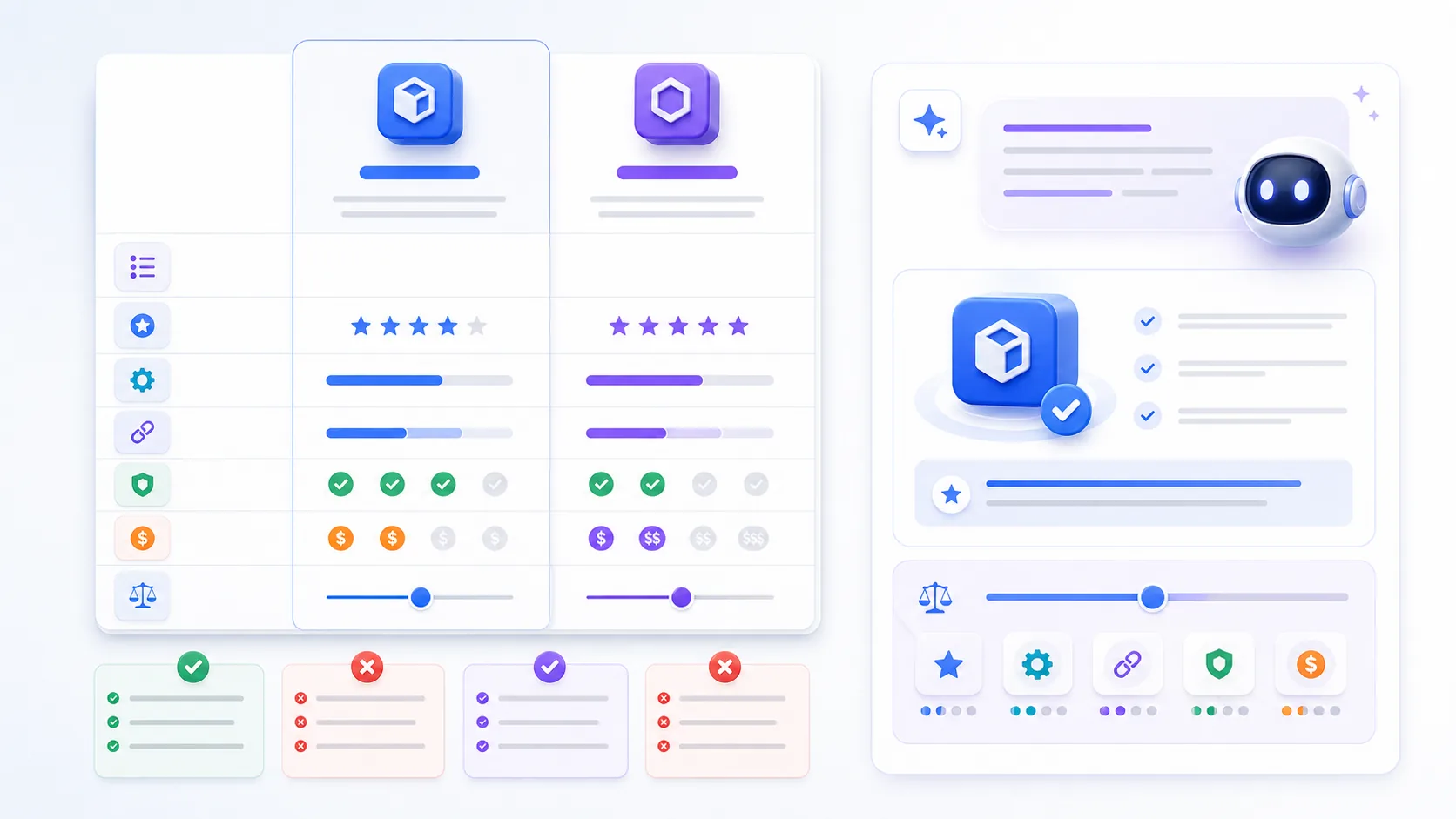
Many AI answers appear when the user is comparing options: best tool, alternative, cost, provider, method, risk, or recommendation.
That is why comparison content is powerful. A good comparison does not simply say your product is better. It explains criteria, use cases, limits, pros, cons, and who each option fits.
If the content feels like a disguised sales page, it loses credibility. If it feels like a useful evaluation, it has a better chance of being cited or used as a reference.
Make the entity behind the content visible
Citability also depends on trust. A page without an author, a clear company, a date, experience, or external signals has less weight than a page backed by a recognizable entity.
Include authorship where it matters, explain methodology when using data, link to company pages or professional profiles, and keep content updated when the topic changes.
This connects to Google’s long-running guidance on helpful, reliable, people-first content: content should help people and show real experience, not exist only to capture traffic.
How to measure whether your content is more citable
Not everything can be measured with one metric. AI visibility is still uneven and changes by prompt, user, language, and engine.
Still, you can measure useful signals: brand mentions in AI answers, cited URLs, competitors that appear, prompts where you are absent, sources that repeat, Search Console impression growth, and links or mentions earned by citable assets.
The key is not only asking “do we show up?”. The better question is: “what kind of source is the system choosing, and what is missing from our page that would make it a better source?”.
Final checklist for creating content AI can cite

- Answer the main question near the top.
- Define important entities, concepts, and terms.
- Add first-party evidence: data, examples, screenshots, cases, or experience.
- Use external sources only when they help verify key points.
- Structure content with specific headings, lists, tables, and FAQs.
- Add schema that matches the real page type.
- Make authorship, company, date, and methodology visible.
- Create honest comparisons when users are deciding between options.
- Update content when data, prices, tools, or processes change.
The short version
Content AI can cite is not simply long content. It is clear, verifiable, structured, and backed by a real entity.
If you want to appear in AI answers, do not start by asking how to trick the system. Start by asking what an AI system would need to see to trust your page as a good source.
Useful sources to go deeper: Google Search Central on AI features in Search, Google’s introduction to structured data, and Google’s helpful content guidance.