

Getting your first SEO clients is more straightforward than it looks from the outside. You may think you need years of experience, a polished agency brand, or a portfolio with twenty case studies. You do not. What you need to understand is that the first clients are not won the same way the next ones are.
Listen to the article summary
A short version explaining how to land your first SEO clients without needing a large portfolio.
Download the SEO client acquisition blueprint
Keep a practical guide with channels, messages, targets, and steps for going from zero to your first clients.
Download free PDFMost consultants and agencies with large client rosters started exactly where you are. The difference between the ones that took off and the ones that stalled was usually the method.
What the client buys (and it is not technical SEO)

Before talking about tactics, we need to make one thing clear.
Clients do not buy SEO. They buy more leads, more visibility, more booked calls, more sales. The owner of a dental clinic in Phoenix does not know or care what a canonical tag is. What they care about is that when someone searches for a dentist near them, their practice appears before the competitor across town.
That gap between what the consultant sells and what the client buys is the most common reason early emails do not convert and first sales calls do not close. The consultant talks about Core Web Vitals. The client is wondering whether this will bring in patients, booked estimates, or revenue.
The shift is simple: translate everything into business consequences. Not “your site loads slowly”, but “you are losing customers at the moment they were closest to calling you.” Not “your pages are not indexed”, but “these pages do not appear in Google.”
When you frame it that way, SEO stops sounding like a technical expense and starts sounding like an investment with a return.
First SEO client plan builder Use it to get a practical recommendation. Open tool
First SEO client plan builder
Choose your current situation and get the best acquisition channel, weekly targets, and a 30-day action plan.
Your situation
Tell us where you’re starting from.
Your client acquisition plan
Use this as a practical weekly operating system, not a generic marketing checklist.
First: build something you can prove
Before you talk to any potential client, you need something concrete to show. A real result.
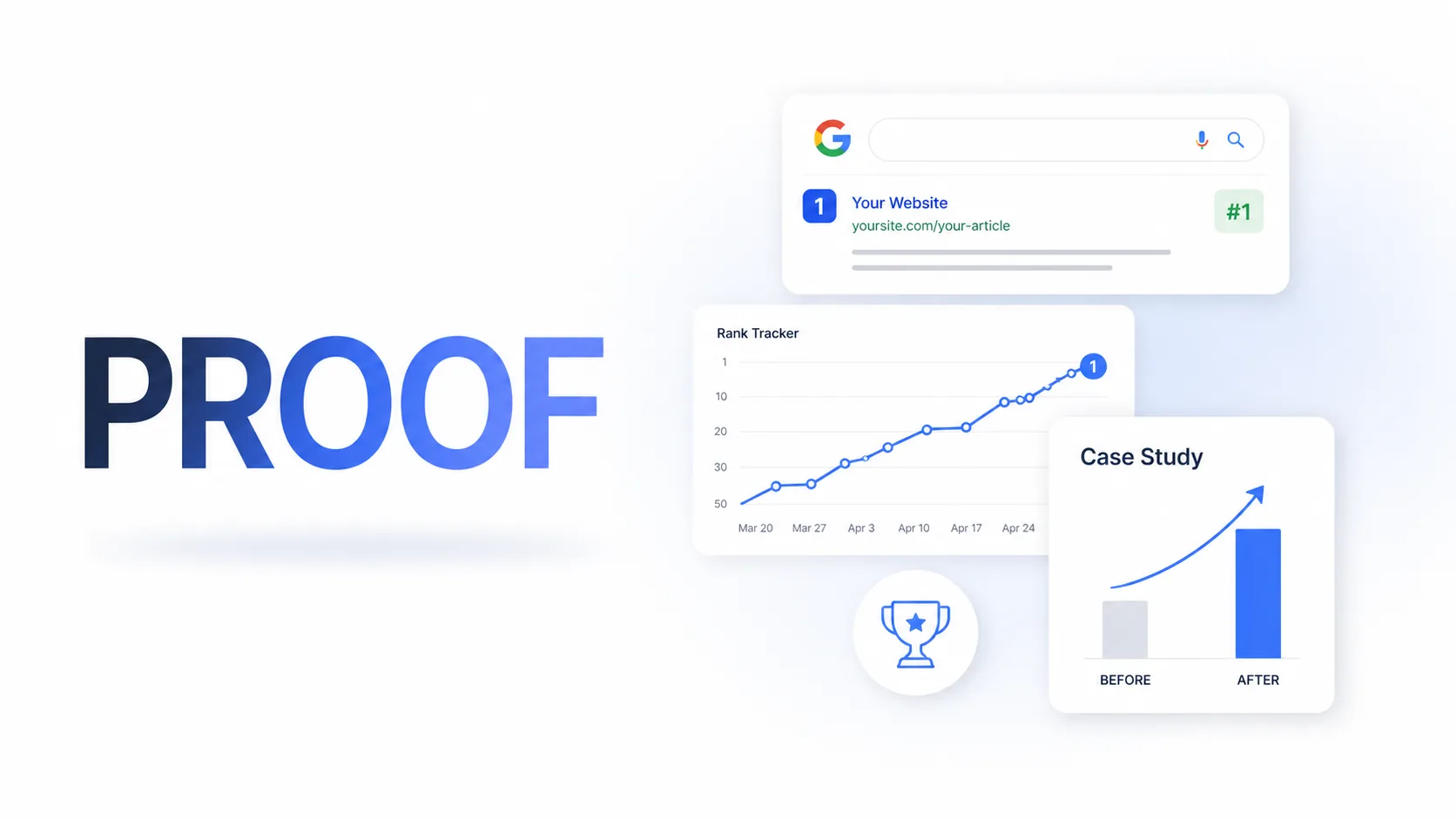
The fastest way is to work on your own website or on a site owned by someone in your circle. Pick a low-competition keyword, publish a well-optimized page, and wait two or three weeks. If the page starts appearing near the top, that screenshot is worth more than any proposal deck. If you use the Wisseo rank tracker to document it, you have dated data and movement over time, not just a Google screenshot.
A well-documented case study does not need to come from a major brand. A local business you moved from page three to position one for its main keyword, with the number of calls before and after, is enough to close the next client. Specific numbers convert better than a PDF listing your skills.
If you do not have your own website, offer to do the work at a reduced rate or for free in exchange for permission to publish the results as a case study. The client may like the process, see the results, and ask for more paid work.
The people who already have reasons to trust you

Your existing network is the most underestimated channel when you are starting out, and it is also one of the most efficient. The hiring barrier is much lower when there is already some relationship.
Make a list of 20 to 30 people: friends, former coworkers, people in your industry, business owners you have met, or anyone you have worked with in any capacity. The goal is not to ask them directly for work. It is to let them know you are offering SEO services and ask whether they know someone who might need help.
Most people will not have anyone in mind right away. But one or two may refer someone, and that referral comes with an implicit recommendation no cold outreach can replicate. Referrals convert faster, require less convincing, and usually create longer relationships than almost any other acquisition channel.
The message does not need to be a pitch. It can be as direct as: “I have started offering SEO services for small businesses. If you know anyone with a website who wants more search traffic, send them my way.”
Cold outreach that actually works
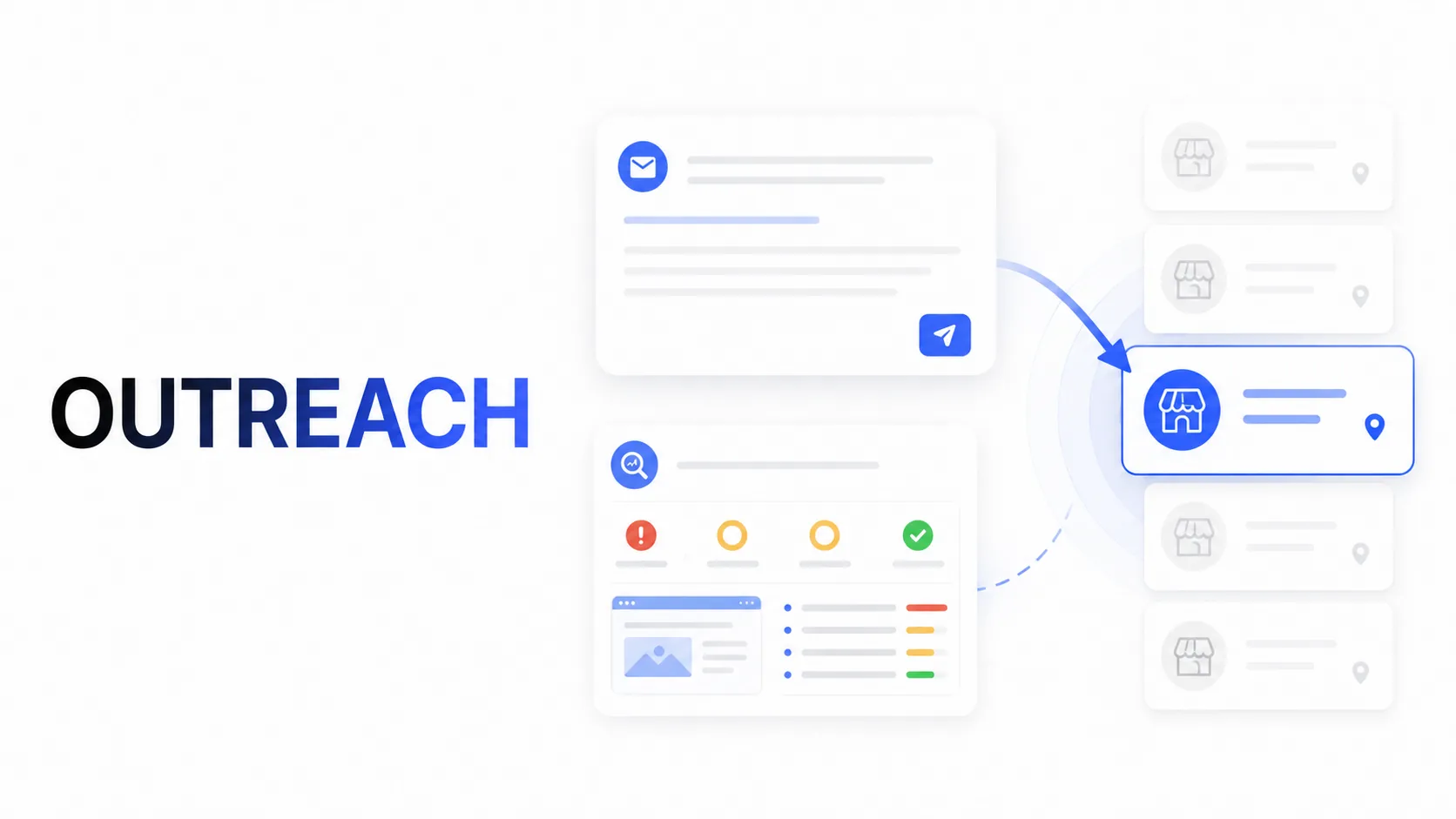
Mass outreach does not work. Ten well-personalized emails generate more replies than one hundred generic ones, because a personalized email proves that you have already taken the time to review the business. That alone separates a serious consultant from spam.
The important part is identifying the problem before you write. A site that is slow on mobile, pages with missing title tags, content that does not match search intent: with the Wisseo SEO audit, you can diagnose that in under five minutes per domain.
The email that opens conversations does not sell services. It points to a specific problem and offers a conversation:
“I reviewed your website and noticed that several product pages have duplicate title tags and H1s. For an ecommerce store, that often turns into lost revenue because Google has a harder time understanding which product page to show. If you want, I can walk you through what fixing it would involve on a 20-minute call.”
There is a second layer that works especially well: trigger events. When a company raises funding, opens a new location, launches a product, hires a VP of Marketing, or moves into a new market, it is more receptive to investing in visibility. An email sent a few days after that announcement, referencing it directly, arrives in the right context and positions you as someone who follows the market, not someone blasting cold emails.
The Loom video that converts better than email
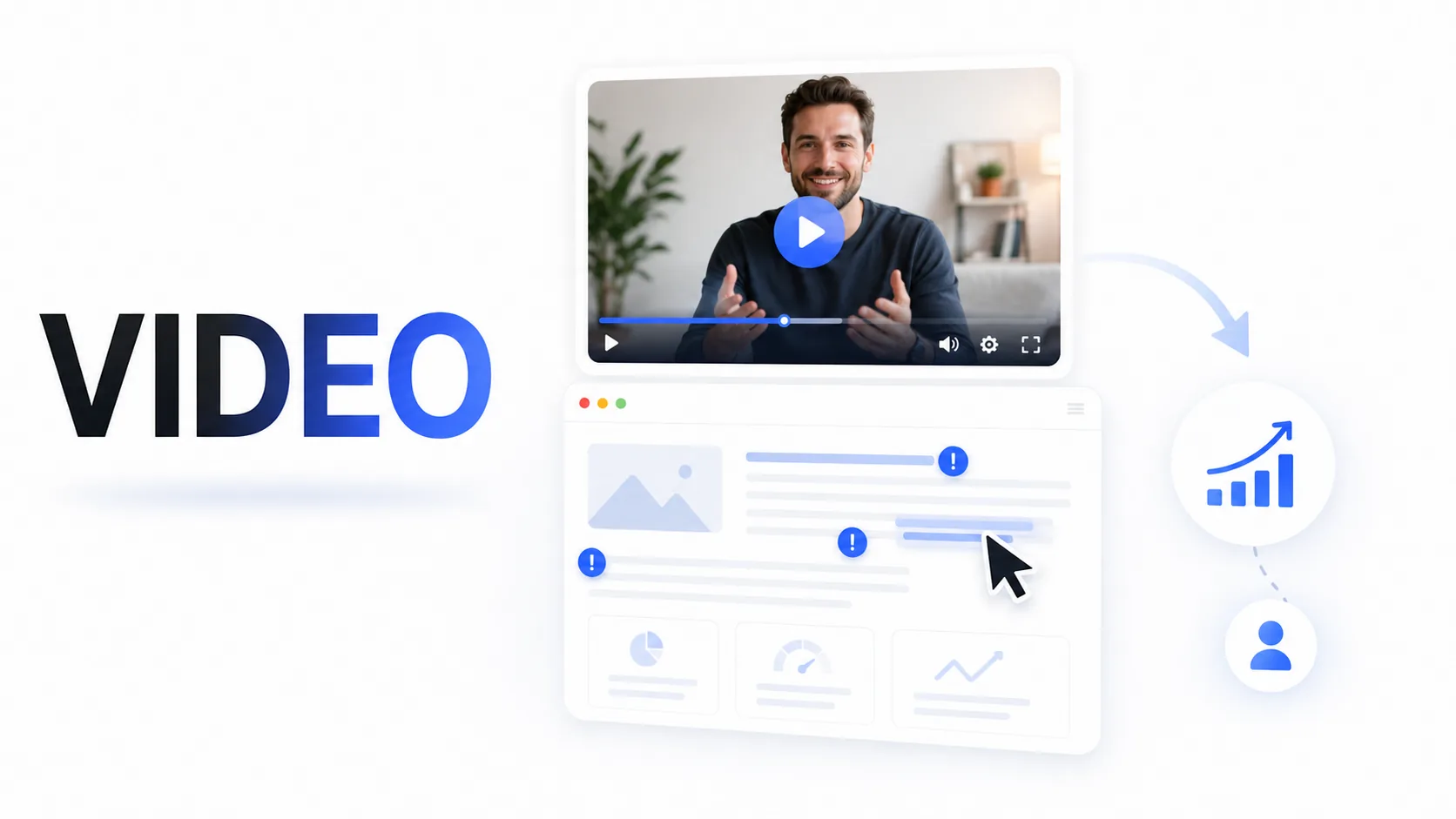
There is one outreach tactic that still works well, even though people are starting to overuse it: the short screen-recorded audit.
The idea is to record your screen while auditing the prospect’s website and show the problems visually. A three-minute video where the prospect sees their own issues explained in business language converts better than a plain email because it turns “I think you have a problem” into “here is the problem, and you can see it yourself.”
The mistake is recording these videos for everyone. Production time climbs and the return drops. What works better is a two-step permission strategy. The first email does not include the video. It includes the finding and a question: “I found something on your site that is likely costing you rankings in Google. Would you mind if I sent you a quick video showing it?” Add one sentence that proves you actually reviewed the site.
Only record the video for people who say yes. That filters for prospects with real interest and makes sure every video goes to someone who has already crossed a curiosity threshold. Keep it between three and five minutes. Start with the problem, explain the business impact, and end with an invitation to talk. No pricing. No service menu. No hard pitch.
The partnerships that bring the best clients
Partnerships with web design agencies are one of the most underused SEO acquisition channels, and one of the highest-converting. Web designers have clients who just launched a site and are more open than ever to talking about online visibility. The designer often does not want to sell SEO. You do not have access to those clients. The fit is natural.
The offer is simple: “When one of your clients launches a website and asks about SEO, send them to me. I will pay you a fixed referral fee for every client who signs.”
The same applies to paid media agencies that do not handle organic search, marketing consultants without an SEO team, and PPC freelancers. They all have clients who eventually ask about organic rankings.
There is also a more structured version: the white-label model. Instead of only receiving referrals, you become the SEO provider the web design agency offers under its own brand. You do the work, they present the results. The agency expands its offer without hiring, and you get projects without going through long sales cycles. To make it work, you need a clear service-level agreement: what you deliver, when you deliver it, and how reporting works.
Three or four active partnerships are worth more than months of cold outreach.
In-person networking has category exclusivity

Local networking works better than many digital consultants think, especially in the United States and especially for small business clients. Two formats matter most, and they work in very different ways.
Your local Chamber of Commerce is usually low-friction and affordable: recurring events, breakfasts, lunches, seminars, and business mixers. It is useful for building presence and long-term relationships, but the return is slow and not very structured.
BNI works differently. Each chapter usually allows only one representative per professional category. If you join as the SEO consultant, you are the only SEO consultant in that group. The other members, accountants, attorneys, real estate agents, printers, insurance brokers, effectively become a referral network because they have the same incentive: the more referrals they generate, the more they receive. The commitment is higher: weekly meetings, attendance expectations, and annual fees that can range from several hundred dollars to more than $1,000 depending on the chapter and location. But for someone trying to build a stable flow of local clients, category exclusivity makes it especially interesting.
In either format, the mistake is expecting fast results. Referrals are social capital, and social capital accumulates slowly. The consultant who shows up, gives a pitch, and expects leads in the first month will be disappointed. The one who shows up, helps people, answers questions, and builds trust for three or four months starts to see the return.
LinkedIn: the channel that works while you are not working
LinkedIn does not usually bring quick clients. But it is the rare channel where you can build authority and visibility without needing a website with traffic or an ad budget, and where the asset keeps working after you publish it.
What works is publishing specific analysis: “I reviewed the websites of ten restaurants in Austin, and this is what the ones showing up in Google Maps had in common.” Or: “This ecommerce store lost 30% of its traffic after the last core update. Here is why, and what I would fix first.”
That kind of content does two things at once. It attracts people who are already looking for SEO help and arrive at your profile with evidence that you know what you are talking about. And it makes your work visible to people in your network who may not have realized you do this.
You do not need to post every day. Two or three strong posts per month, built around real data and a concrete angle, already put you ahead of most SEO profiles on the platform. A large share of B2B buyers choose the provider that first gave them useful education during their research process. Consistent publishing is how you become that provider.
How to price when you do not have a track record
At the beginning, people almost always charge too little because they think it will make clients easier to get. It can work in the short term, but it creates two expensive problems later. First, clients value the work less. Second, you create a reference price that becomes hard to raise.
The right starting price is not the lowest price possible. It is the price you can defend with what you can show. If you have a case study with real results, even from a small site, you can charge a reasonable price from your first paid client.
What you can do is offer a reduced-price agreement where the client pays less in exchange for letting you publish the results. That turns the discount into an investment with a specific return. What does not make sense is working for free for months without any agreement about what you receive in return.
The moment clients start coming in on their own
There is a turning point that most consultants and small agencies recognize when they reach it:
When you have two or three published case studies.
When an article on your website ranks for searches like “SEO consultant for [your niche]”.
When you have active referrals in your network, clients start arriving without outreach.
Getting there usually takes three to six months of consistent work. It is not immediate, but every action you take during that period builds something that compounds: a case study, a partnership, a ranking article, a LinkedIn relationship. Cold outreach depends on the email reaching the right person at the right time with the right budget. The system you build during those months has less of that dependency.
The Wisseo keyword explorer can help you identify the queries your own website should rank for. A site that ranks for searches like “SEO for ecommerce brands in the US” or “SEO consultant for law firms in Chicago” is the most efficient salesperson you can have, and it works without you paying it a salary.