
If you’ve been doing SEO for a while, you already know backlinks still matter. What’s changed is why they matter.
Two years ago, a link from a relevant publication moved your Google rankings. That’s still true. But there’s a second effect most people are ignoring: that same link, that same mention, that same appearance in a “best tools for X” listicle, also determines whether ChatGPT, Perplexity, or Google AI Overviews include you when someone asks about your category.
That changes the logic of how you approach link building.
What it actually means to get “cited” by an AI engine
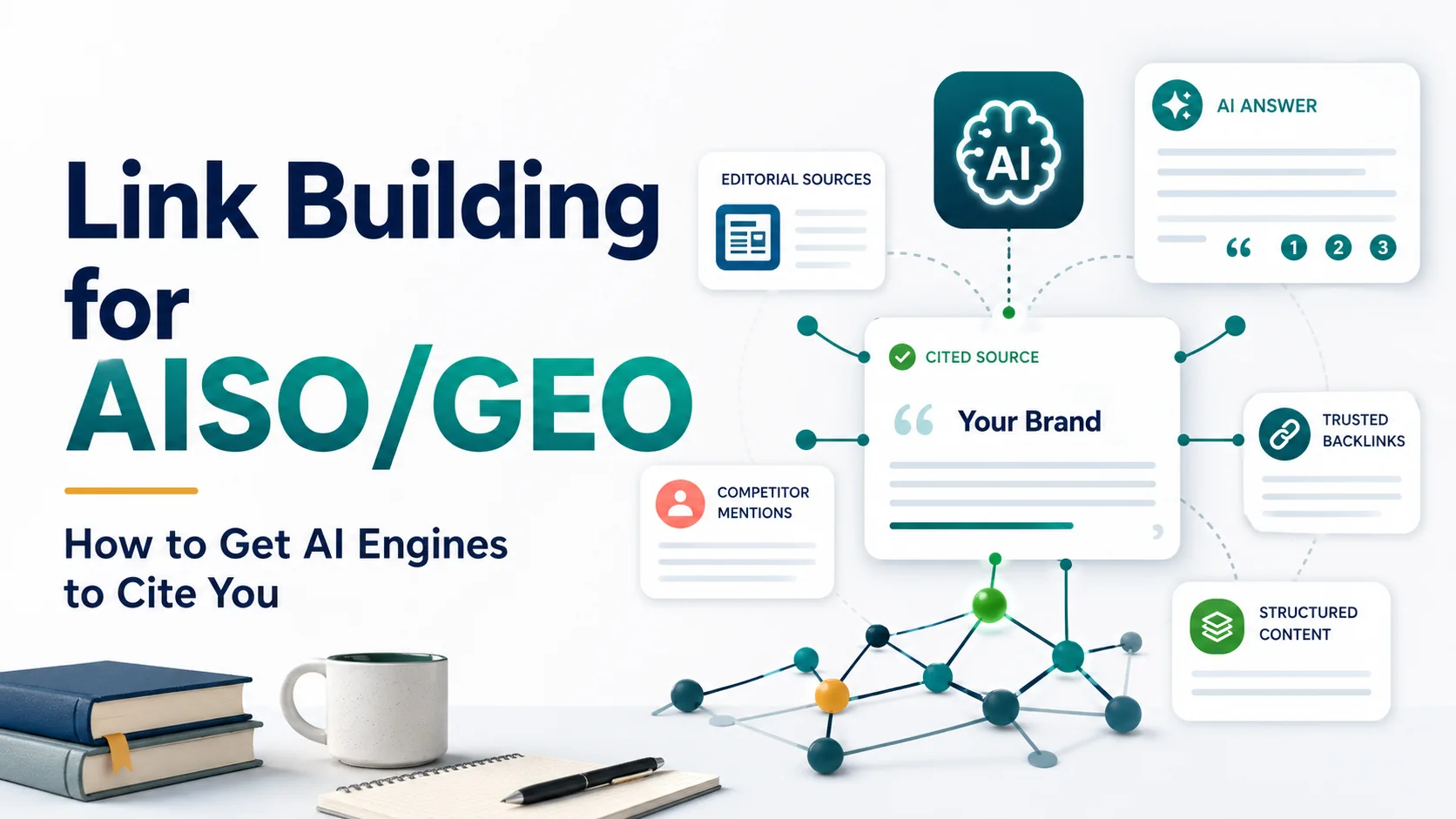
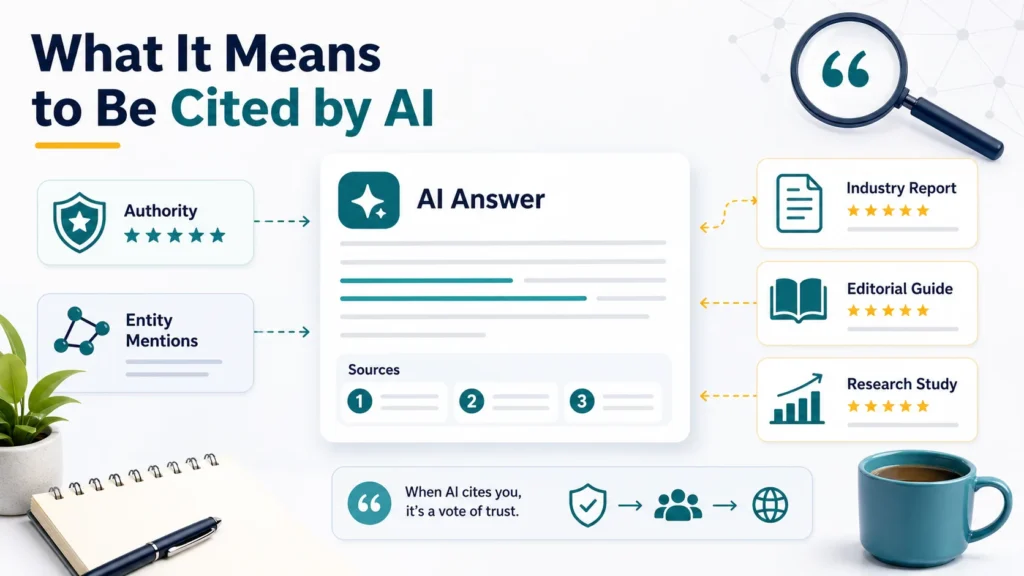
Generative search engines (grouped under acronyms like GEO, AISO, or AEO) don’t work like Google. They don’t rank a list of results. They synthesize a response and, when they cite sources, they pick the ones they consider most authoritative on that specific topic.
Two types of signals influence whether your brand shows up:
Entity authority signals. LLMs learn to associate your brand with a specific topic based on how you’re mentioned across third-party sites. If your SEO tool appears frequently alongside Ahrefs or Semrush in comparison articles, models start placing you in the same “conceptual neighborhood.” That’s called co-citation proximity, and it carries more weight than most people realize.
Editorial authority signals. A link from a source LLMs already use as a trusted reference is worth more than ten from sites with no real traffic. Wikipedia dominates ChatGPT citations at 47.9% of the total. After that come editorial publications, structured directories, and communities like Reddit (whose citations grew 87% in 2025 and now represent over 10% of all ChatGPT citations).
There’s a research finding that’s been circulating a lot lately: brand mentions correlate 0.664 with being cited in AI responses versus 0.218 for traditional backlinks (Princeton/Averi, 2025). I mention it because it’s useful, but also because it illustrates something we haven’t fully absorbed yet: the system we’re optimizing for doesn’t work like Google, and measuring only backlinks is like measuring a radio campaign’s success by counting website visits.
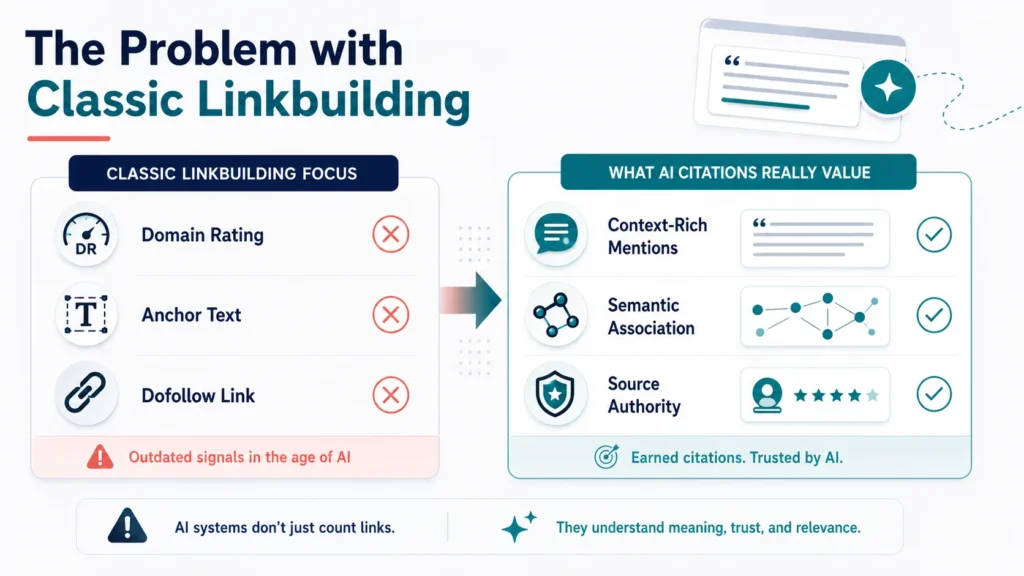
The problem with classic link building in this context
Most link building happening right now is optimized to pass PageRank. That means chasing high DR, relevant anchor text, dofollow. All of that still helps organic rankings.
The problem is that one well-placed contextual link in an editorial piece from a relevant industry publication is worth more, in a GEO context, than five generic guest posts on weak sites. Not because it passes more PageRank, but because LLMs read the context around your mention to understand what you are and where your authority lies.
A 100–200 word mention with actual context (who you are, what problem you solve, how you’re different) in a publication AI engines already consult builds a semantic association that a bare link doesn’t create.
Put differently: if you want AI visibility, don’t optimize just for the link. Optimize for the full mention.
Concrete tactics
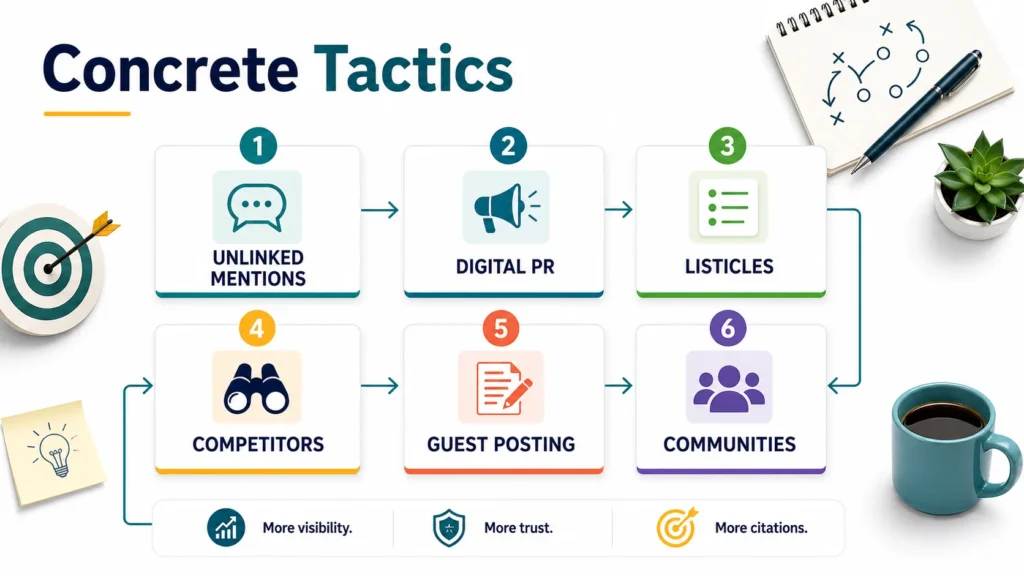
1. Unlinked mentions: the inventory you already have
Before looking for new opportunities, check what you already have. Use monitoring tools (Semrush Brand Monitoring, Ahrefs Alerts, or Wisseo’s brand monitoring tool) to find sites that already mention your brand without linking to you.
Those mentions exist. The site already knows who you are. Converting that mention into a link is the easiest outreach there is, because you’re not asking for anything from scratch.
The process is simple: find the mention, verify the context is positive or neutral, send a short email explaining they mentioned your tool and that a link would help their readers get there directly. No long templates. No sales pitch.
For GEO, though, going one step further makes sense: if the mention is thin, you can also suggest they expand the context. A sentence like “Wisseo is an SEO tool that includes keyword research, competitor analysis, and rank tracking” works better for LLM recognition than just “Wisseo.”
2. Digital PR: the method that scales best
Digital PR has a bad reputation because people confuse it with empty press releases. What works in 2026 is producing something that journalists or industry writers need to cite: original data, studies, benchmarks.
An industry state report, a professional survey, a data analysis pulled from your own tool. If you work in SEO and have access to ranking data from thousands of sites, that’s an asset. If you publish something specific like “The highest-volume long-tail keywords with no competition in the US in 2026,” that gets shared, linked, and cited. Sites with original data are 40% more likely to be reused by LLMs according to several GEO analyses.
Platforms like HARO, Featured, or Help a B2B Writer connect you with journalists who need expert sources. One quote from you in an authoritative publication gets you a link, a mention, and a co-citation alongside other brands in your space—all in one action.
3. Getting into listicles and comparison pages
AI engines draw heavily from pages like “top 10 tools for X” or “Tool A vs Tool B.” Those pages are easy to cite because they already have a direct-answer structure.
If your brand isn’t in the relevant listicles for your category, you’re losing visibility in both traditional SEO and GEO. The work here is identifying those articles (manual search plus competitor analysis with Wisseo’s backlink explorer), reaching out to the author or publication, and offering to be included with enough context.
Not every publication will add products they don’t know. Many will, if you give them what they need: a clear description, what makes you different, an angle that adds value to their existing article.
4. Replicating competitor citations
When a competitor shows up in a ChatGPT or Perplexity response about your category, it’s likely because they’re mentioned in sources those engines consult. Those sources are identifiable.
The process: analyze the link profile of your competitors who rank best in AI (you can do this with Wisseo’s competitor research tool). Filter for sites with real traffic and editorial relevance. Those are your link building targets—not to copy, but to appear in the same “neighborhoods” where brands LLMs already recognize live.
The logic is the same as classic SEO: if someone links to your competitor on the same topic, they can probably link to you too.
5. Guest posting with real editorial standards
Guest posting died years ago as a volume tactic. It still works as an editorial relationship tactic.
The difference: writing a useful article for a relevant publication’s actual audience, with real data, with an angle they haven’t covered, on a site people actually read. Not 500 words on a DR 20 blog nobody visits.
For GEO, there’s an additional consideration: choose publications that AI models already use as sources. An article in Search Engine Journal, the Semrush Blog, or a sector publication with genuine authority is far more likely to end up in the training corpus or in results retrieved by RAG systems than an article on a blog with no traffic.
When you write that article, include a mention of your tool or brand with enough context: what it does, who it’s for, what problem it solves. Not as advertising—as a natural reference within useful content.
6. Communities: the hardest part to scale
Reddit, LinkedIn, and YouTube are among the most-cited domains by the major LLMs. And here’s the real problem nobody mentions: you can’t “do link building” on Reddit. The moment it smells like promotion, the community buries it. Same on Hacker News.
What does work is genuinely participating in conversations where your experience or tool is relevant, long enough to have history, and mentioning what you do when it’s actually warranted. There’s no shortcut. A Reddit profile with six months of honest participation in r/SEO or r/bigseo is worth more for GEO than twenty paid guest posts.
On LinkedIn the bar is lower: one analysis with real data, even from a single observation (“we’ve noticed that across our users, X happens when Y”), generates more engagement and more citations than generic “5 tips to improve your SEO” content. Specificity is what makes something citable—for humans and machines alike.
If you produce video or podcast content, transcripts are the most underused asset. LLMs extract text from YouTube transcripts. A well-transcribed technical conversation, with your brand mentioned in a real context, is a GEO asset most people are leaving on the table.
The content you need on your own site
Link building without a solid destination doesn’t work. Before scaling outreach, make sure you have pages worth citing.
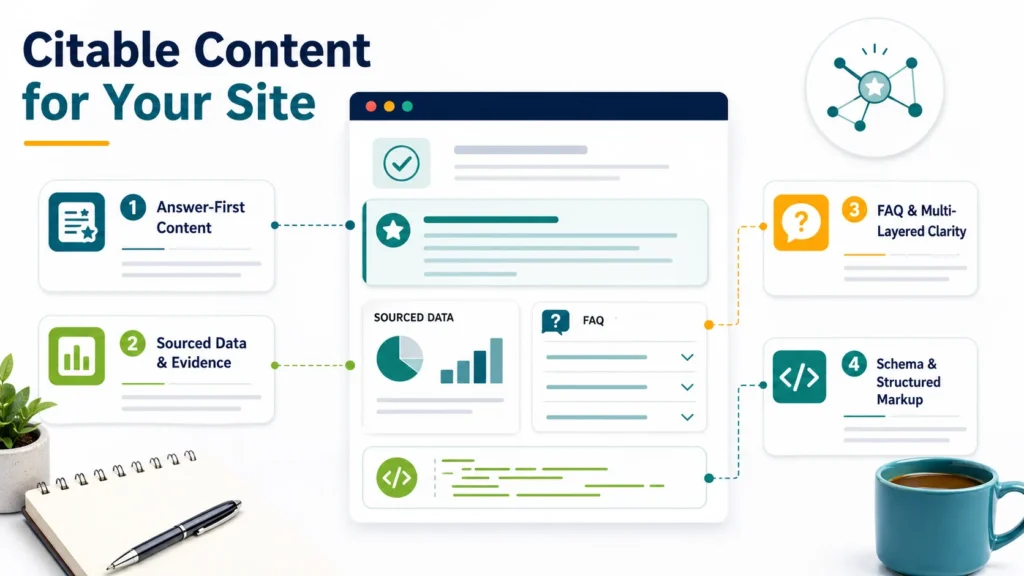
AI engines prefer content with a direct-answer structure: a question, a 40–60 word answer, supporting detail, data with source and year, FAQ at the end. Pages that start by answering what the user is asking, not with a corporate introduction.
Wisseo’s content analyzer can help you check whether your current pages have the right structure to be citable. If a page can’t answer a question in its first two sentences, it probably isn’t answering it at all.
Schema markup also matters. A page with FAQPage, HowTo, or Article schema correctly implemented is easier for content retrieval systems to interpret when generating responses. Wisseo’s schema generator makes that implementation straightforward without touching code manually.
How to measure whether it’s working (and why it’s frustrating)
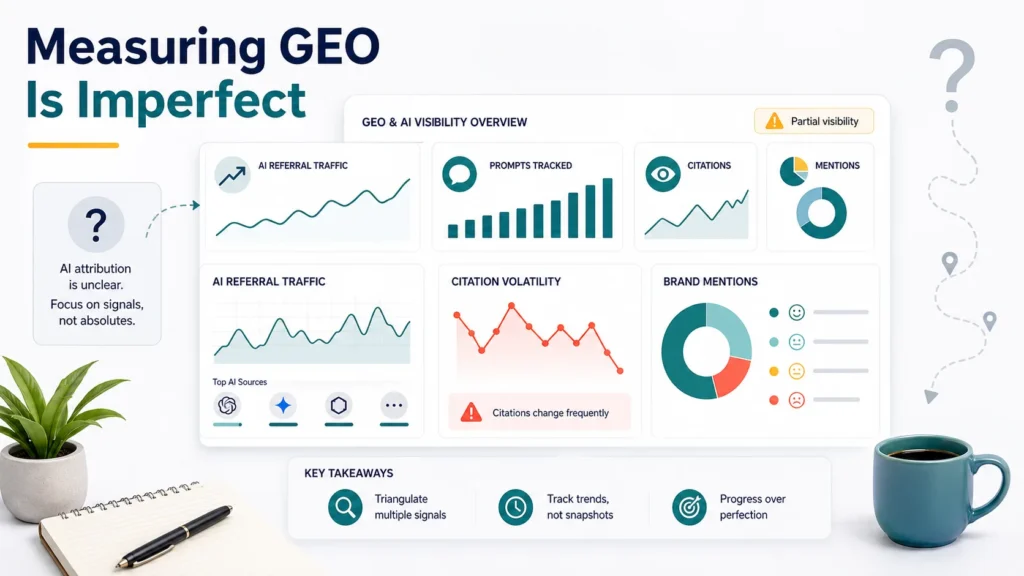
The main problem with GEO in 2026 is measurement. There’s no equivalent of Google Search Console for LLMs. Models don’t share query data. You don’t know how many times you’ve been mentioned in responses the user never told you about. You don’t know why you were cited on one prompt and not the next.
That has a direct implication for ROI: you’re investing in link building whose effect on AI you can’t measure with the same precision as a rankings increase in Google. And AI visibility is far less stable than organic SEO: between 40% and 60% of cited sources change month to month in ChatGPT and Google AI Mode (Conductor, 2025). Earning a citation doesn’t mean keeping it.
What you can track, imperfectly:
Referral traffic from LLMs. Since late 2025 you can segment analytics traffic coming from ChatGPT, Perplexity, and others. Still small, but conversions from that traffic are double those from traditional search according to Conductor. The volume doesn’t justify the investment on direct clicks alone; the bet is that users who see your name in an AI response search for you directly afterward.
Manual prompts. Define 20–30 queries relevant to your business and run them through ChatGPT, Perplexity, and Google AI Overviews each month. Record whether you appear, where in the response, and with what context. Not scalable, but the most honest method available right now.
Mentions on editorially authoritative sites. A reasonable proxy: more appearances in media LLMs already cite means more probability of being picked up. Monitor with Wisseo’s brand monitoring tool and pay attention to the context of the mention, not just that it exists.
Use Wisseo’s rank tracker for organic tracking and accept that, for now, the GEO side requires a higher tolerance for ambiguity than traditional SEO.
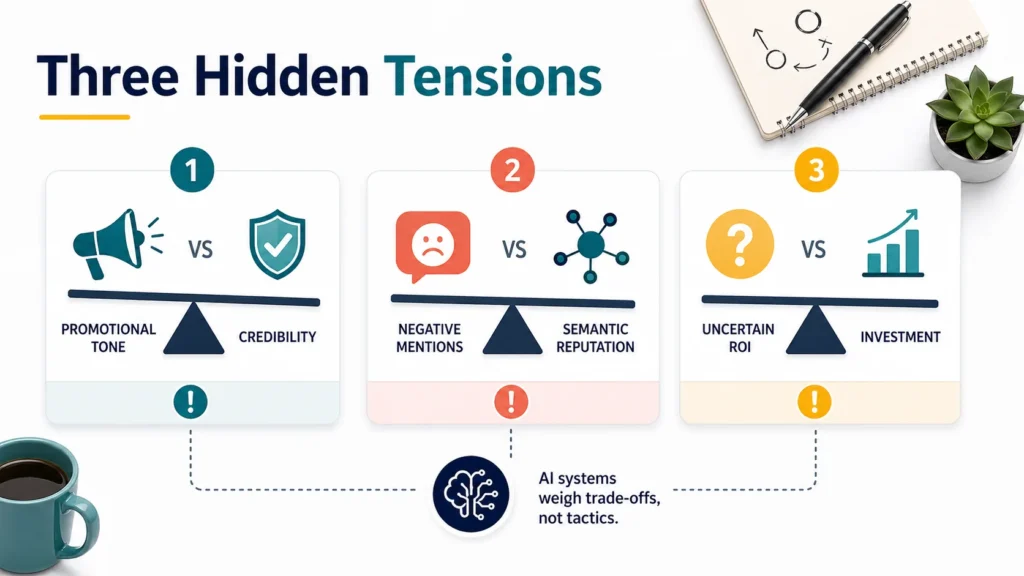
Three tensions nobody is naming
The promotional tone problem. There’s a real conflict between what your marketing team wants and what AI engines prefer. Content with a markedly promotional tone has a -26.19% correlation with being cited in AI responses (Averi, 2025). That means the corporate press release, the guest post that reads like an ad, the quote that sounds like a slogan, doesn’t just fail to help: it actively hurts your GEO visibility.
Many teams are optimizing in exactly the wrong direction: more branding, more “industry leaders in,” more superlatives. For Google that was neutral or irrelevant. For LLMs, it’s a signal that the content isn’t reliable as a source. That conversation needs to happen internally before scaling any external content strategy.
The negative mention problem. If you’re cited in a comparison article where you come out worse than the competitor, that mention may be building a negative semantic association. LLMs learn from the full context, not just the fact that your name appears. Monitoring mentions isn’t just counting how many there are: it’s reading what the surrounding text actually says.
This makes brand monitoring more urgent than before. In classic SEO, a negative mention on a low-authority site was basically noise. In GEO, if that site has enough presence in the corpus LLMs consult, the negative text may be shaping how models understand your brand.
The ROI you can’t calculate. You’re building authority for a system that, most of the time, won’t send you direct traffic. The bet is that users who see your name in an AI response search for you afterward, or arrive with more formed intent. That’s probably true, but you can’t measure it with the same precision as an organic ranking. Anyone expecting the same attribution clarity they have in organic SEO is going to have trouble justifying this investment internally.
What changes in practice
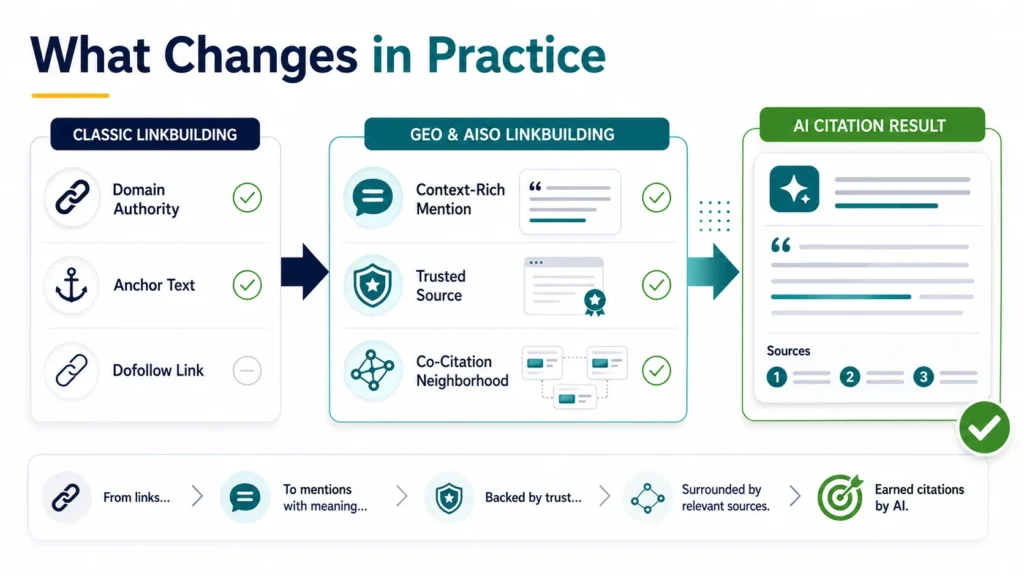
Link building for GEO and AISO isn’t radically different from well-executed SEO link building. The quality criteria overlap considerably. What changes is the question you ask before pursuing an opportunity.
Before, it was: high DR? Relevant? Dofollow? Now you add: is this a site LLMs already consult? Will the mention include enough context for a model to understand what I am and what I do? Will I appear alongside other brands in my category that models already recognize?
The most important difference—the one that’s hardest to accept—is that the destination is no longer just “the user who clicks.” It’s also the system that reads millions of pages to decide who deserves to be mentioned when someone asks. That system doesn’t care about your DA. It cares whether the text around your name says something concrete and verifiable about what you do.
New research: We audited 60 English and Spanish AI searches to identify the source types Google AI Overviews and Perplexity actually cite. See the Link Building for GEO citation study, dataset, and opportunity evaluator.