

There are sectors where SEO is an advantage. In legal services, it is practically a requirement.
Listen to the article summary
A short version of the legal SEO strategy: local visibility, practice pages, reviews, authority, and AI search.
Download the legal SEO blueprint
Keep a practical guide for ranking a law firm in competitive local search markets.
Download free PDFMost people looking for a lawyer do not start by comparing brand campaigns. They start with a search: “personal injury lawyer near me”, “divorce lawyer Chicago”, “DUI attorney Los Angeles”, “estate planning attorney Austin”, or “criminal defense lawyer Miami”. Whoever appears at that moment gets the opportunity. Whoever does not appear competes later, usually through paid ads, referrals, or price.
The CPC for searches like “personal injury lawyer near me” or “DUI attorney Los Angeles” can easily exceed $75 to $150 in competitive U.S. markets, and some legal keywords climb even higher. That means a well-managed PPC campaign can cost thousands of dollars for each signed client. SEO is not free, but a law firm that ranks its practice pages in the top five results for its main local keywords is capturing the equivalent of serious monthly ad spend without paying per click.
The problem is that legal SEO is not like SEO for a restaurant, a SaaS company, or an ecommerce store. Google applies far more scrutiny to legal content because a bad answer can affect someone’s money, freedom, family, or business. That changes the whole playbook.
Legal SEO competitiveness checkerOpen the tool to estimate your legal market difficulty and the right order of work. Open tool
Interactive tool
Legal SEO Competitiveness Checker
Get a clear picture of your local market and the effort needed to rank and grow your firm.
Assess your market
Fill out the details below to evaluate your local SEO landscape.
Competitiveness Result
Here is how competitive your market looks and what it will take to win.
Competitive
Top 5 recommended actions
Key factors to watch
Why the legal sector is different in SEO
Before tactics, it is worth understanding why what works in other industries does not always work for law firms.
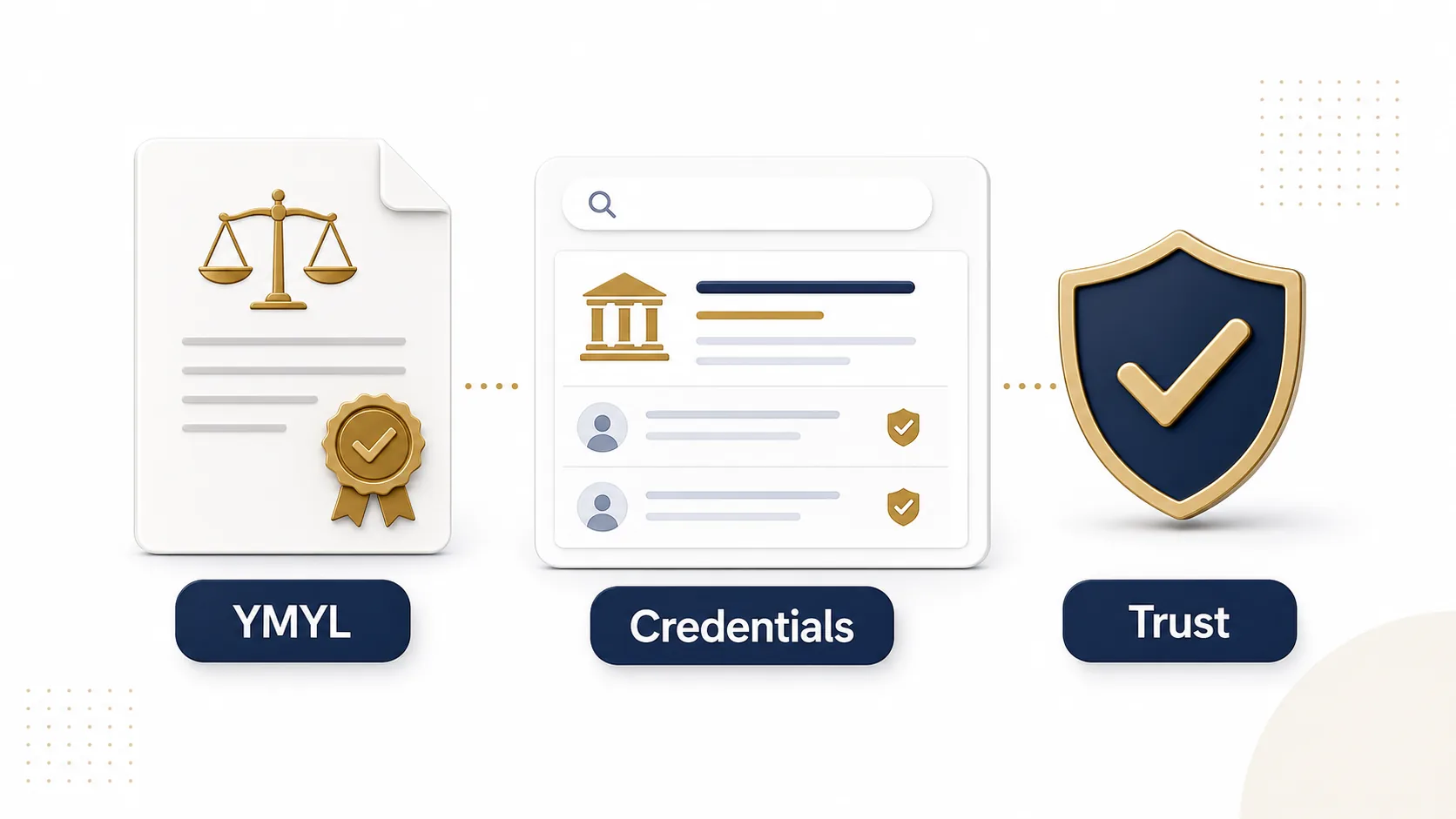
Legal services fall inside Google’s YMYL category, which stands for “Your Money or Your Life”. It means a nice-looking website is not enough. The site has to demonstrate experience, verifiable credentials, and real authority in the relevant practice area.
For a U.S. law firm, that means evidence such as state bar admission, lawyer profiles, practice-area expertise, case experience within ethical and advertising-rule limits, publications, local presence, and consistency across trusted legal directories. These are not decorative trust signals. They are part of how Google and AI systems evaluate whether a legal website deserves visibility.
The competition is also extreme. Legal rankings are built with much more than keywords. What follows is what actually moves the needle.
Keyword research for law firms
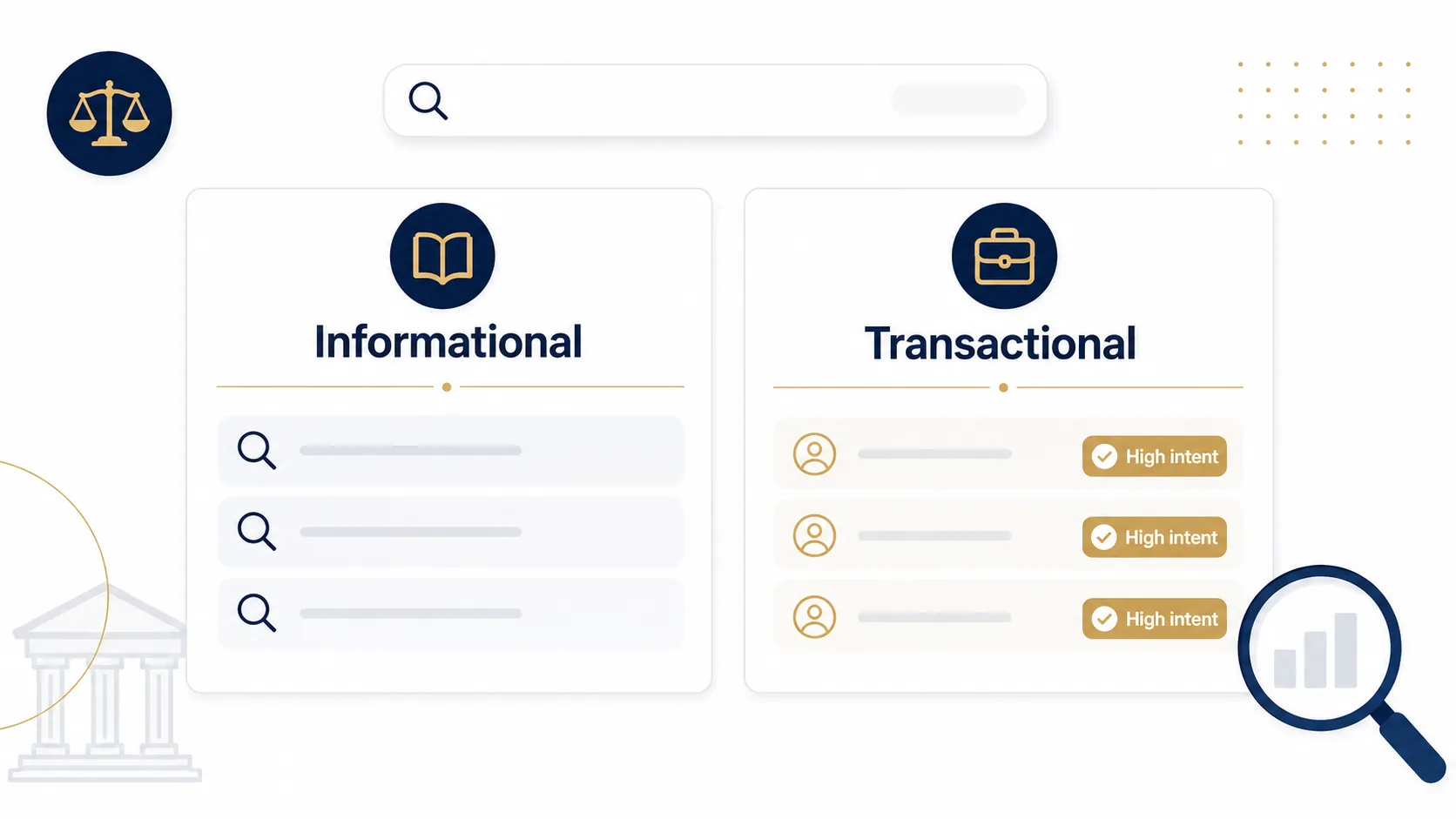
Legal keyword research has to separate informational intent from commercial intent. “How much does a divorce cost in California?” and “divorce lawyer in San Diego” are not the same search. One is research. The other is a potential client close to contacting a firm.
Both types belong in the strategy, but they serve different goals. Practice-area pages target transactional searches. The blog builds topical authority and captures informational searches. Mixing them on the same page, or expecting the blog to convert like a service page, produces mediocre results on both sides.
Start with practice areas, not generic legal terms
The starting point is the practice area. If a firm works in personal injury, family law, criminal defense, estate planning, or employment law, each branch creates a different keyword universe that needs to be researched separately.
The keyword research tool shows search volume, difficulty, and related variations for any term. In legal SEO, the difficulty filter is especially important. Trying to rank for “lawyer New York” as a mid-sized firm is a multi-year battle against firms with six-figure budgets. “Wrongful termination attorney Queens”, “probate lawyer Tampa”, or “truck accident lawyer Fort Worth” with lower difficulty are real opportunities and can convert just as well because the searcher knows exactly what they need.
Group keywords by intent clusters
A single practice page should not target one keyword in isolation. It should cover an intent cluster: primary term, local variations, service variants, common client questions, and related legal vocabulary. A page about wrongful termination should naturally cover retaliation, discrimination, severance, deadlines, EEOC complaints, settlement negotiation, court claims, and documentation.
One strong page that covers the full intent cluster with natural variations will usually perform better than three thin pages that split authority across the domain.
Technical credibility: what Google checks on legal websites
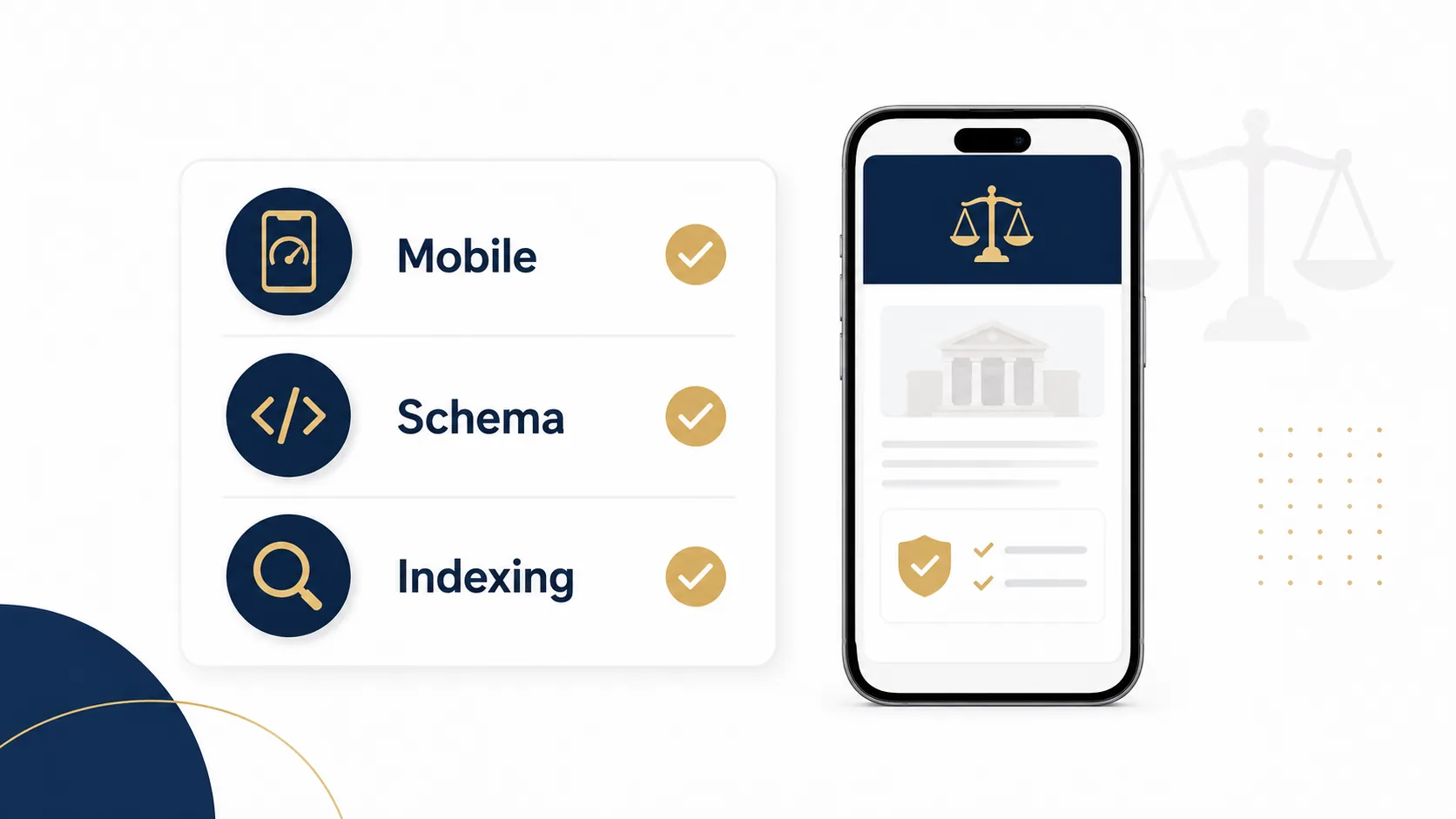
Legal SEO is not only about content. Technical trust signals matter because they help search engines understand who is behind the advice, where the firm operates, and whether the entity is legitimate.
Structured data for legal entities
Legal websites with structured data can improve click-through rates by 20% to 30%. In a SERP where several firms compete for the same position, rich results, reviews, opening hours, locations, and practice areas create visual differentiation that can increase clicks without needing a higher ranking.
- LegalService / LocalBusiness: address, phone number, opening hours, and practice areas.
- Person: individual lawyer profiles, credentials, bar membership, and areas of specialization.
- Organization: firm-level entity data, logo, sameAs profiles, and official references.
- FAQPage: carefully selected questions on practice pages, not spammy FAQ blocks added just for SEO.
Implementing LegalService, Person, and Organization schema is the first technical step. The real difference is consistency: every piece of information about the firm on the website should tell the same story. The schema generator creates the correct JSON-LD code for each type without manual programming.
Remove outdated legal pages
Law firms accumulate technical debt without noticing it: lawyer profiles for people who no longer work at the firm, practice areas the firm no longer offers, or location pages created for cities it no longer serves. These pages are not just crawl-budget waste. They dilute the topical signals that matter for ranking.
Practice pages: the commercial core of the site

Before thinking about the blog, social media, or anything else, the practice-area pages need to be strong. They are the assets that convert.
A working practice page is not a short paragraph describing the service followed by a contact form. It needs to include:
- Clear explanation of the legal problem and who the service is for.
- Specific situations where the firm can help.
- Procedural steps and expected timeline.
- Evidence of experience in that practice area.
- Relevant local context where the firm operates.
- Questions potential clients ask before contacting a lawyer.
Local practice pages need real local substance
A page for “employment lawyer in Dallas” that only swaps “Houston” for “Dallas” from the main page will not rank well, and it should not. A page that references local courts, Texas employment law context, regional industries, and specific local issues has real substance that justifies its existence.
Demonstrable authority: what separates law firms that rank from those that don’t
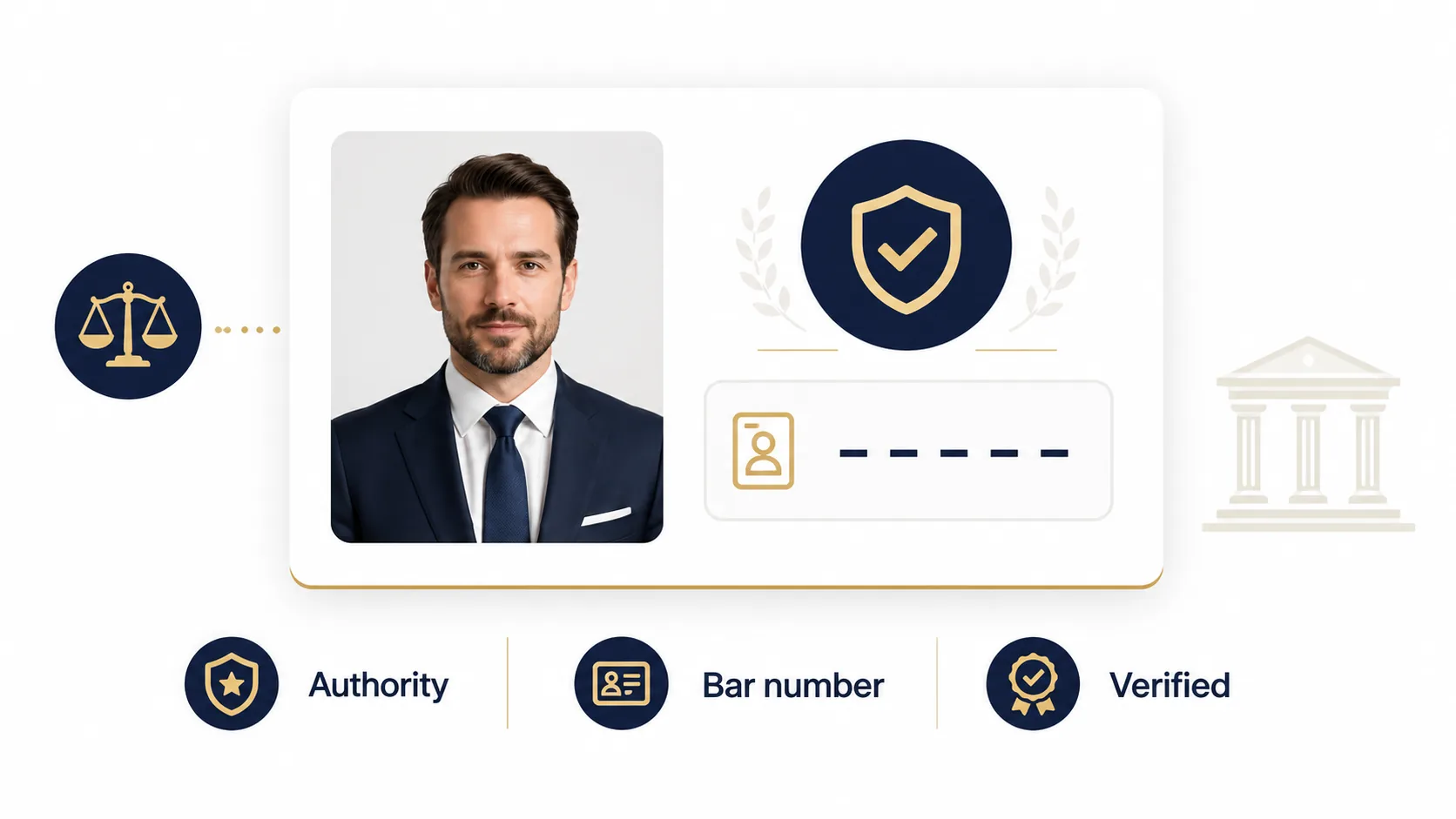
Google evaluates legal-service websites with a level of scrutiny that does not apply to most industries. In 2026, that scrutiny is even stricter.
The strongest legal SEO signals are difficult to fake: verified lawyers, named authors, bar membership, published legal analysis, case experience within ethical limits, local recognition, and citations from trusted legal or institutional sources.
These are signals a generic writer cannot manufacture and AI cannot invent credibly. Google is weighting them more precisely because they are hard to falsify.
Lawyer profiles should prove expertise
Most lawyer profiles on law firm websites are CV summaries: university, bar membership, practice areas, and a photo. That meets the minimum, but it does not build authority.
Including state bar admission details reinforces trust for Google and AI systems that verify credentials. Add the courts where the lawyer is admitted to practice, the types of cases handled, publications in legal journals, participation in CLE events or conferences, and profiles in relevant state or local bar association directories.
Authorship matters more in legal content
Legal blog content should not be anonymous. A named lawyer should review or author the piece, and the page should make that clear. This matters for trust, compliance, and search visibility.
Local SEO for law firms: the Local Pack is where the battle is won
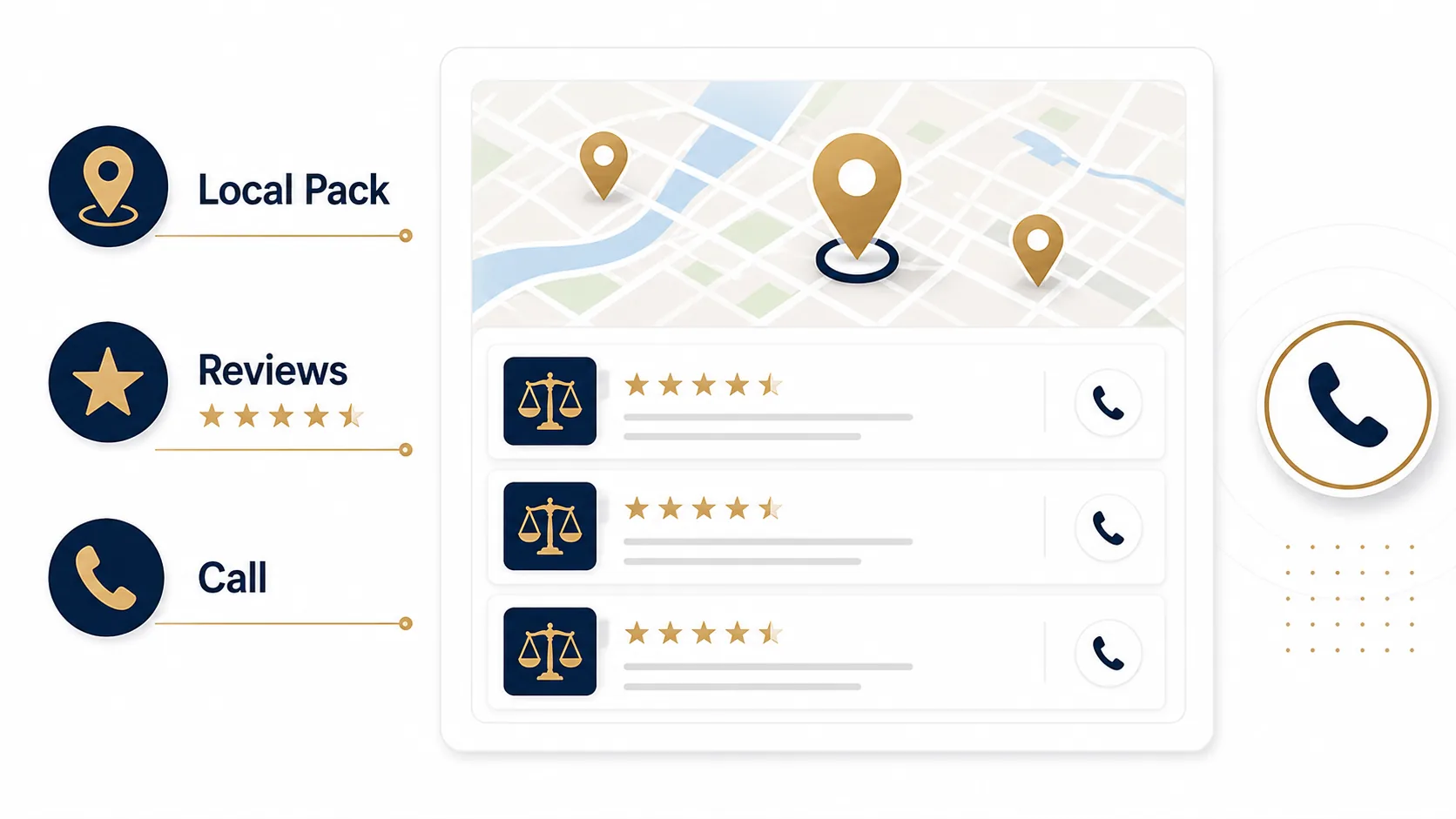
Forty-six percent of all Google searches have local intent. For most law firms operating in a city or region, the Local Pack, the three map results that appear in local searches, is where real client acquisition happens.
Google Business Profile is not optional
The basics are mandatory: complete information, correct categories, professional photos of the office and team, accurate opening hours, and a clear description of practice areas. Businesses with a complete Google Business Profile are 70% more likely to attract visits from potential customers.
Reviews influence both rankings and conversion
Legal reviews need to be handled carefully and ethically, but they matter. A firm with consistent, genuine reviews has a stronger chance of earning clicks and calls than a firm with no visible client feedback. The key is not volume at any cost. It is consistency, legitimacy, and relevance.
Legal citations are different from generic directories
Legal directories, state bar association directories, local bar listings, and respected professional profiles are authority citations that matter more than generic business directories. A link and mention from a state bar, county bar association, Avvo, FindLaw, Justia, Super Lawyers, Martindale-Avvo, or a respected local legal directory is more valuable for a law firm’s local visibility than dozens of low-quality directory links.
Blog content: when to publish and when to update
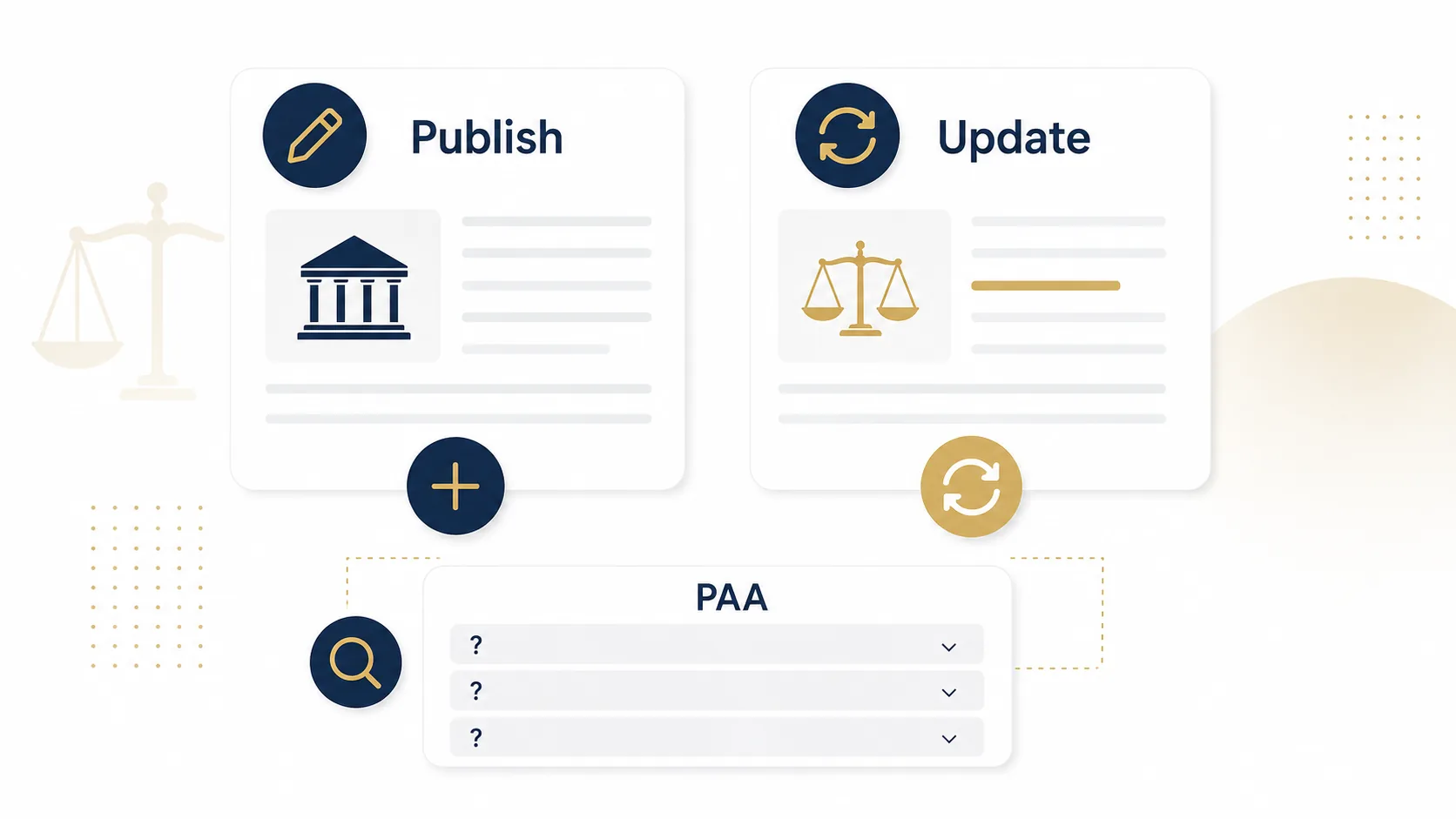
The blog has a role in legal SEO, but not the role many firms give it. It should not replace practice pages. It should support them by building topical authority and answering the questions potential clients ask before they are ready to call.
People Also Ask results around practice-area keywords are one of the clearest sources of blog topics with real demand: “How much does a divorce lawyer cost?”, “Can I be fired while on FMLA leave?”, “How long do I have to file a personal injury claim?”, “What happens after a DUI arrest?” These are questions potential clients search before contacting a lawyer.
Build topic clusters around practice areas
A pillar page about employment law can link to cluster pages about wrongful termination, layoffs, workplace harassment, unpaid wages, retaliation, discrimination, and employee claims. Each cluster page links back to the pillar and to related pages. This internal-linking architecture tells Google the domain covers the topic with breadth and depth.
Update before publishing more
Legal content expires. A law changes, a deadline is modified, or a court ruling changes how thousands of cases are interpreted. An article citing outdated law actively damages the perceived credibility of the domain.
Before publishing new content, check which existing posts need updates. The content analyzer identifies pages that have lost rankings compared with the previous year and why. Updating those posts often produces faster results than publishing from scratch because the page already has indexation history and some authority.
Never publish AI content without lawyer review
In legal SEO, this is not just a best practice. It is a risk-management issue.
AI is useful for outlines, research support, and basic summaries. But do not publish AI-generated legal text unless a lawyer adds direct experience, verifies every factual claim, and confirms that the content is accurate for the jurisdiction.
Link building for law firms
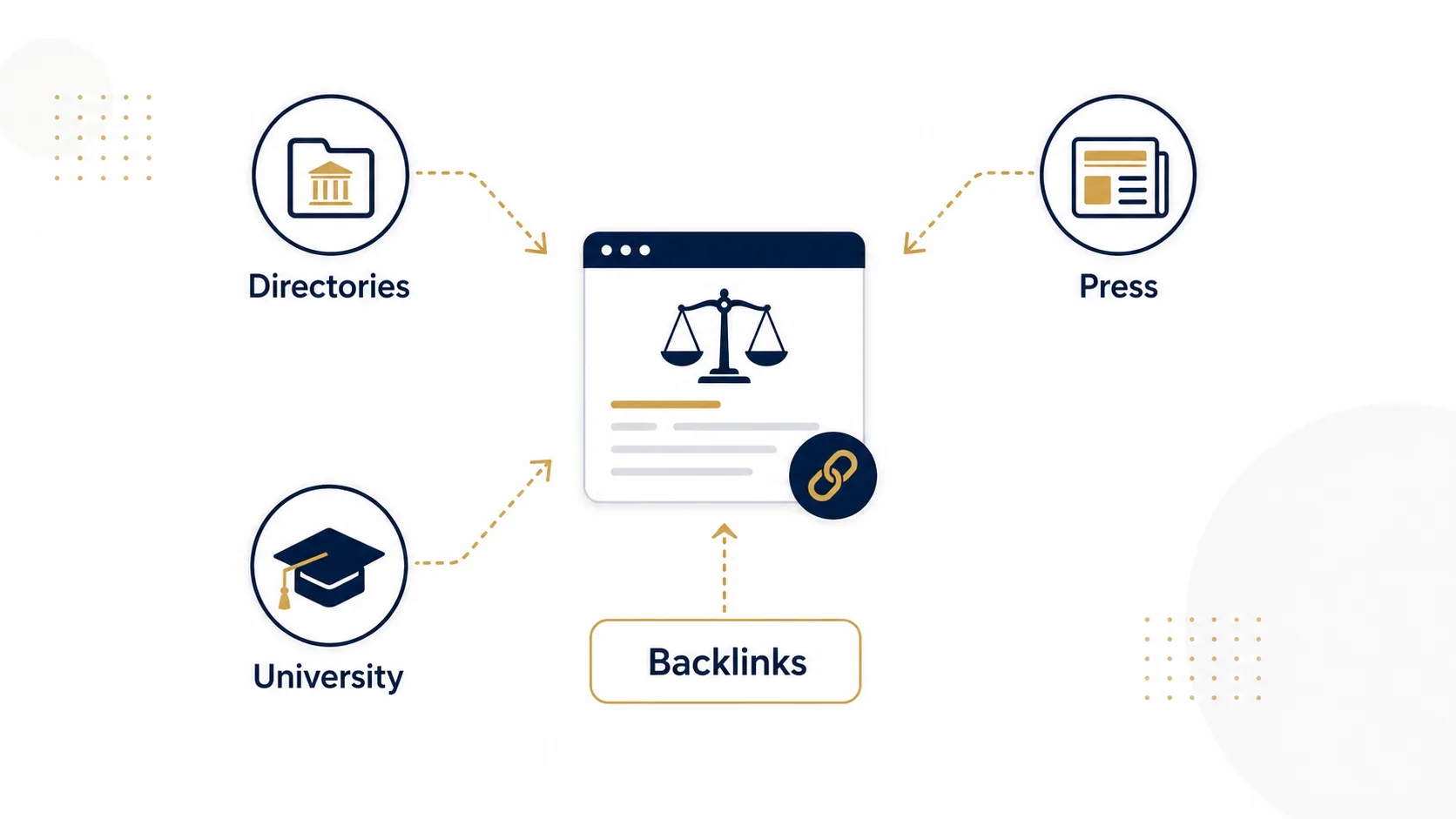
Backlinks work in legal SEO the same way they work elsewhere: links from trusted, relevant domains pass authority, and that authority supports rankings. The difference is that legal link sources are narrower and quality matters much more than volume.
The strongest sources usually include:
Specialized legal directories. State bar directories, county bar associations, Avvo, FindLaw, Justia, Super Lawyers, Martindale-Avvo, and respected local legal listings form the foundation of a legitimate backlink profile.
Local and regional press. Being quoted as an expert in a local newspaper, business journal, TV station website, or regional publication creates high-authority links with strong geographic relevance. The strategy is to build relationships with journalists who cover courts, legislation, public safety, business, family issues, or consumer protection and be available when they need expert commentary.
Legal journals and professional blogs. A signed article in a respected legal publication, bar journal, law review, or practice-area publication can generate both visibility and authority. The content has to be genuinely substantial, not generic legal commentary.
Universities and law schools. Talks, collaborations, legal clinics, and academic events can generate links from high-authority domains while reinforcing professional credibility.
AI visibility: the channel law firms can no longer ignore
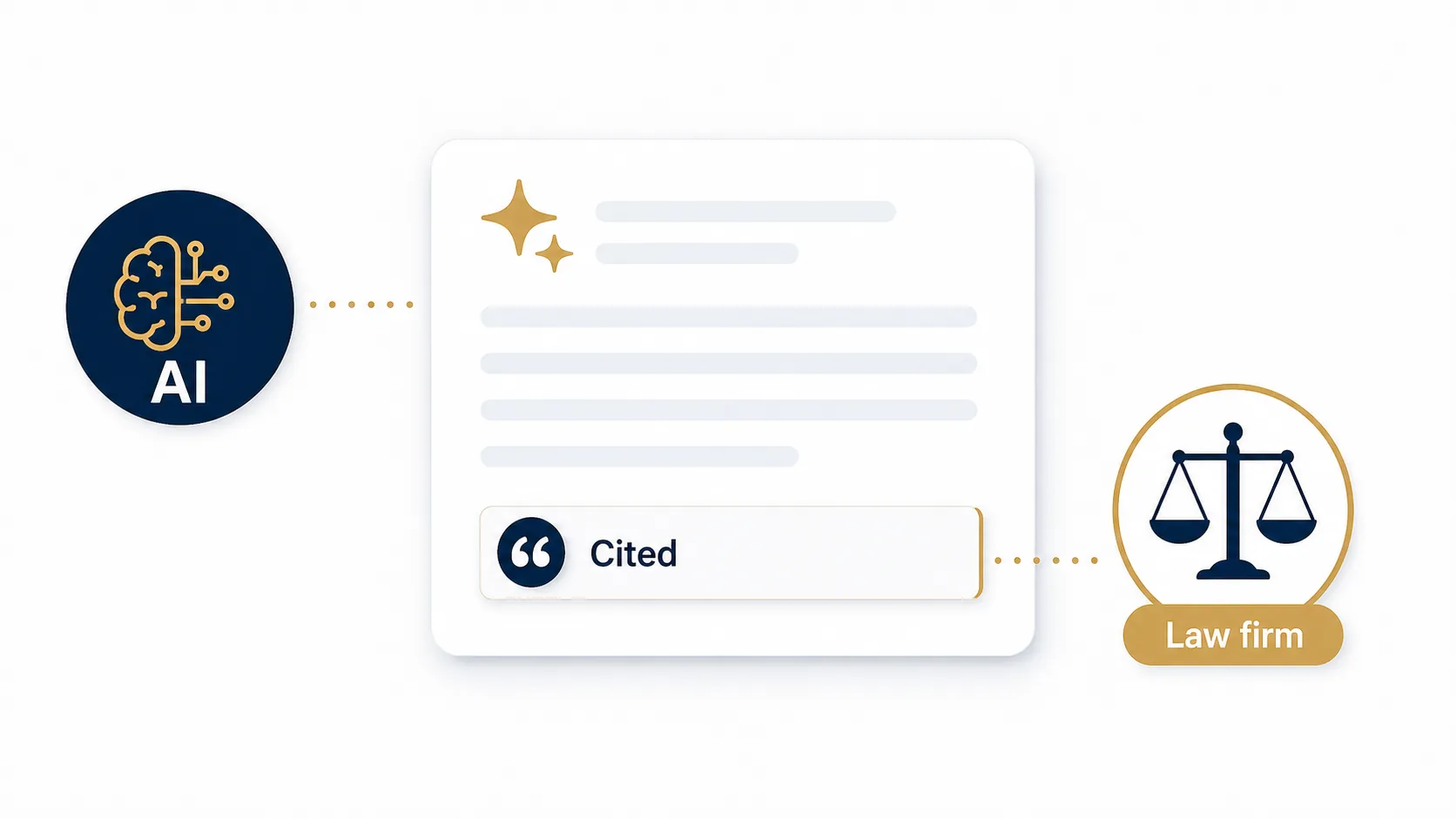
AI-referred traffic grew sharply in 2025, and a growing share of consumers now use ChatGPT or other AI tools to search for information about lawyers before contacting one. This is already happening.
What makes a law firm appear in AI-generated answers is, in essence, similar to what makes it rank in Google: clear authority signals, well-structured content that answers specific questions directly, and consistent presence in sources the AI considers trustworthy. State bar profiles, county bar associations, legal directories, regional press, court-related sources, and academic or professional publications all matter.
When someone asks ChatGPT for the best business law firm in a city, the AI generates an answer based on the sources it considers reliable. If a firm has clear entity signals, structured content, and citations in trusted sources, its chances of being mentioned increase.
Some practical adaptations improve AI visibility:
Direct question-and-answer structure. A heading phrased as a question followed by a concise answer in the first two sentences is easier for AI systems to extract.
FAQ sections on practice pages. Carefully written FAQ blocks with schema can help AI Overviews understand and cite the page for legal queries.
Updated content. AI systems reduce trust in sources that contain outdated information. The content analyzer helps detect pages whose information may have aged badly.
The AI optimization tool tracks how often a firm appears in AI-system responses for target queries and shows which pages are being cited and which are not.
How to measure results
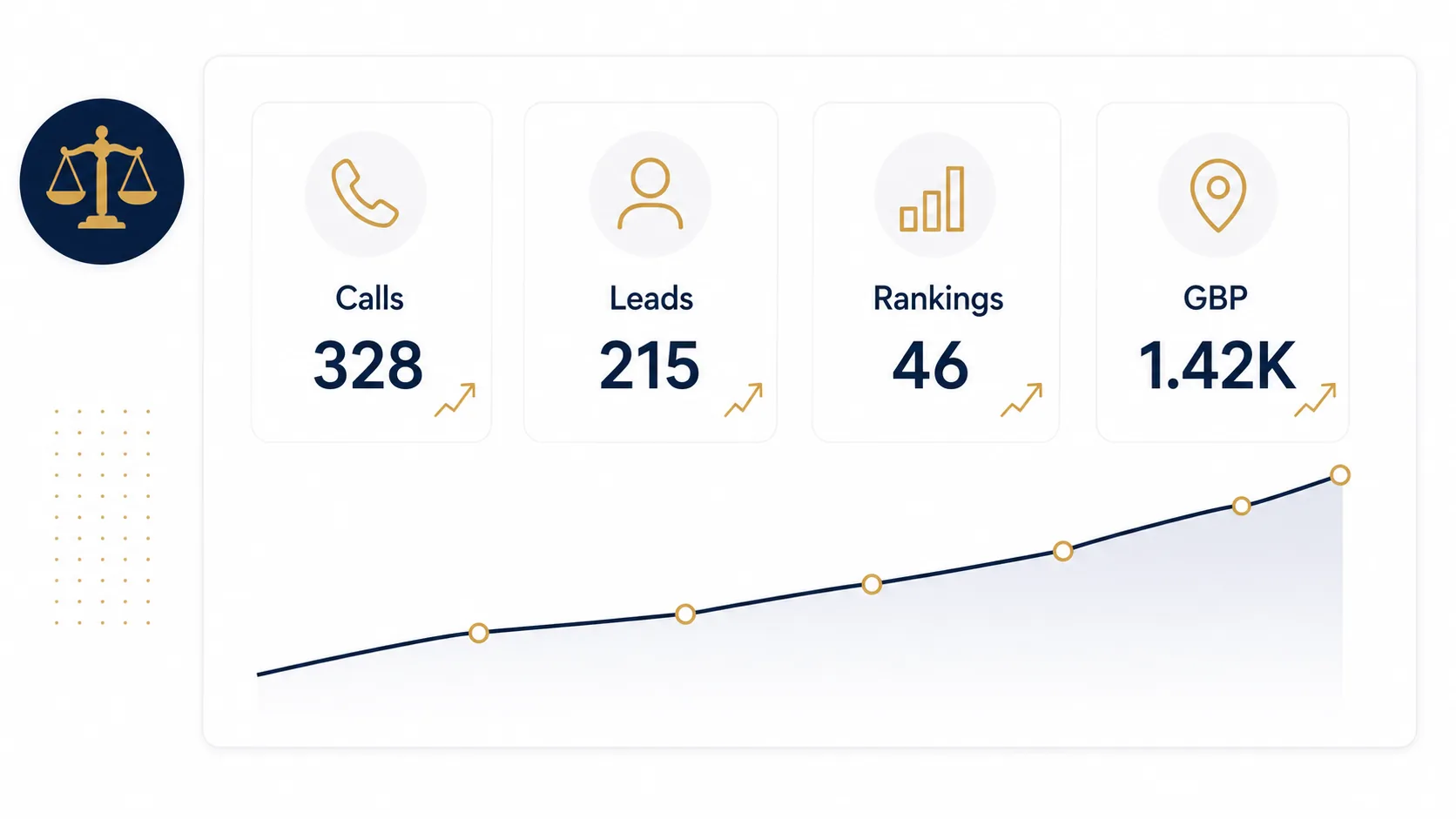
SEO for law firms does not produce results in weeks. The average time for a legal firm to recover its SEO investment can be around 14 months. That is not a reason to avoid SEO. It is a reason to measure correctly from the beginning.
- Year-over-year organic traffic, split between practice pages and blog content.
- Rankings for local commercial keywords, not just broad informational terms.
- Calls and forms from organic search, not traffic alone. In legal services, call attribution is often the most important conversion data.
- Local Pack visibility for priority practice areas and locations.
- AI citation frequency for target queries.
The rank tracker helps monitor the terms that matter, separated from the noise of informational keywords that bring impressions but not clients.
Where to start
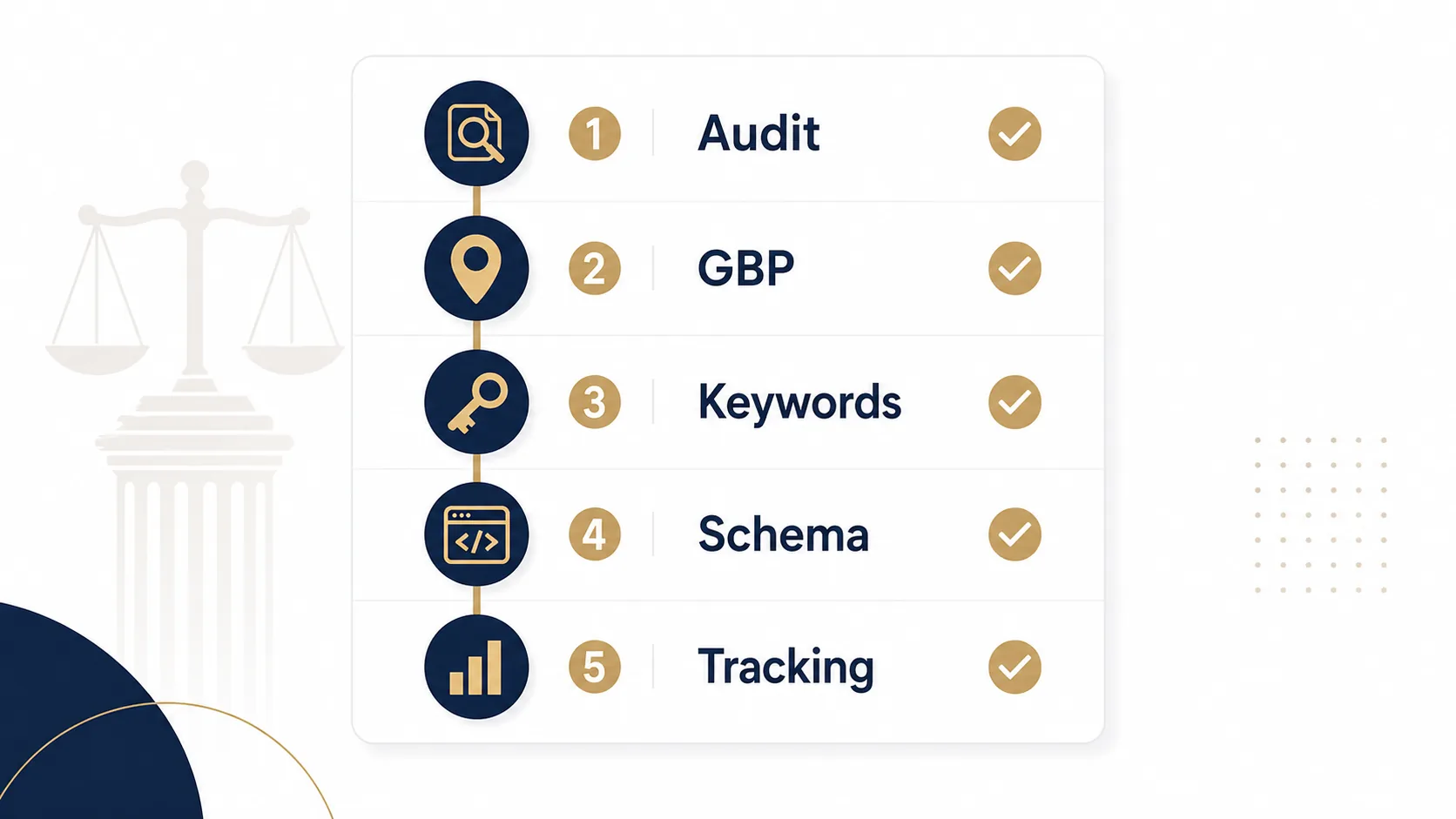
If the firm has never had a proper SEO strategy, the best sequence is:
- Technical SEO audit of indexation, canonicals, crawlability, speed, structured data, and outdated pages.
- Keyword research by practice area and mapping each page to a specific intent cluster.
- Review of lawyer profiles against demonstrable credibility criteria: bar number, verifiable history, concrete specializations, and external references.
- Schema markup on practice pages, lawyer profiles, and FAQ sections with the schema generator.
- People Also Ask research for each practice area and a blog plan that supports the commercial pages.
- Local SEO work on Google Business Profile, legal citations, reviews, and location-specific signals.
- Link building through legal directories, local press, specialist publications, and academic or professional collaborations.
- AI visibility tracking with the AI optimization tool.
Legal SEO is difficult because the market is competitive and the trust threshold is high. But that is exactly why it is valuable. Once a law firm earns durable visibility for high-intent local queries, every organic lead becomes less dependent on paid clicks and less exposed to rising ad costs.
The Wisseo SEO tools suite supports each stage: technical audits, keyword research, content analysis, rank tracking, schema generation, backlink research, and AI optimization for the searches that increasingly decide which law firms clients consider first.