
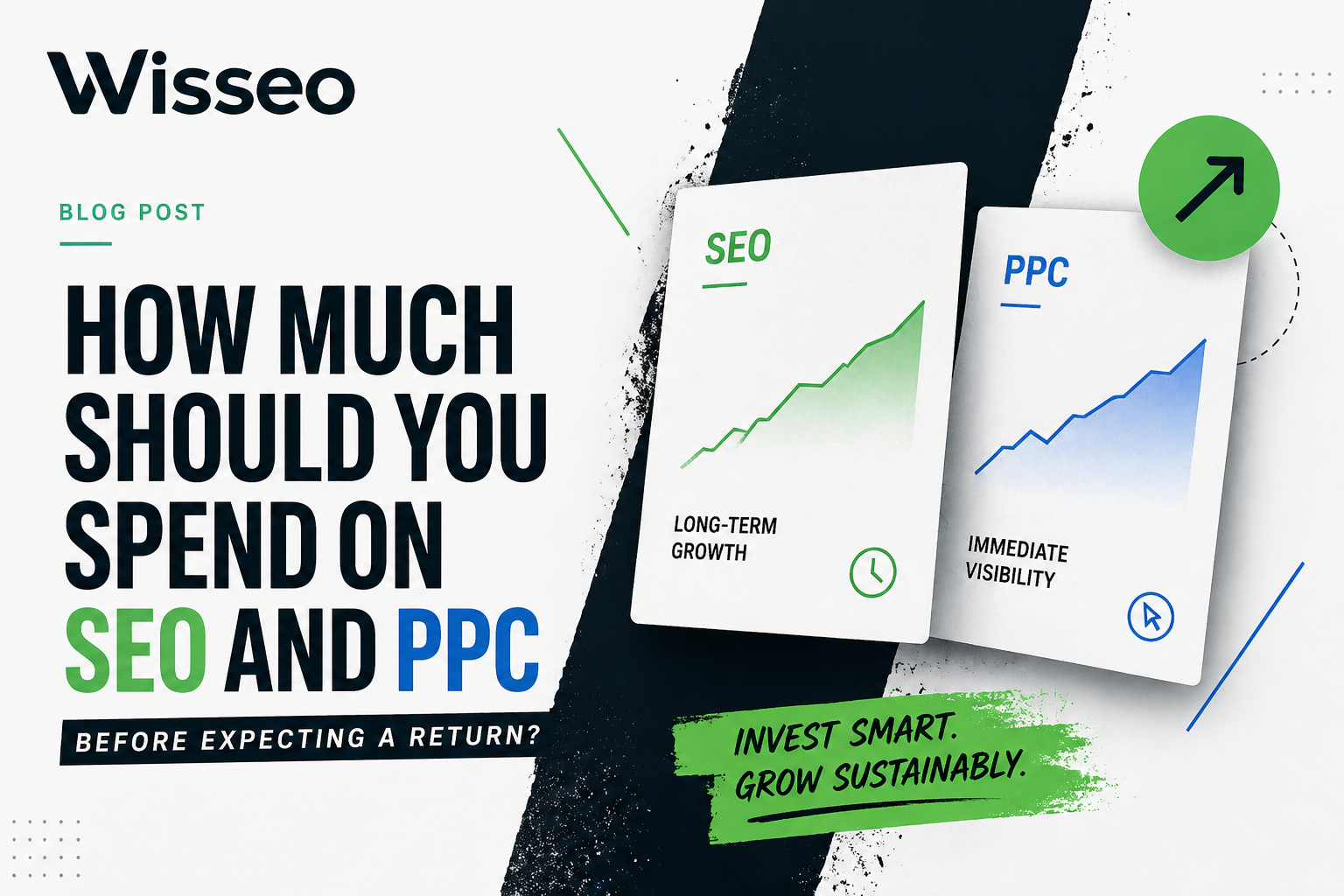
Most articles compare SEO and PPC as if they were rival teams.
SEO is long term. PPC is immediate. SEO brings free traffic. PPC stops when you stop paying.
All of that is true. It is also not very useful.
The better question is: how much money do you need to spend before you can reasonably know whether that channel works?
Many businesses spend too little on PPC to learn anything. They give SEO too little time to show anything. Then they conclude that marketing does not work, or that one channel is better than the other.
Usually, it is not that simple.
SEO and PPC do not fail in the same way. They have different cash-flow patterns, different learning curves, and different types of risk.
PPC burns money quickly, but gives feedback quickly. SEO burns money more slowly, but gives feedback more slowly.
SEO/PPC Minimum Test Calculator Use it to get a practical recommendation. Open tool
SEO/PPC Minimum Test Calculator
Calculate how much you need to invest before you can tell whether SEO, PPC, or conversion should be your priority.
Test validity
Tu presupuesto puede generar datos útiles si no dispersas el esfuerzo entre demasiados frentes.
Recommended verdict
Use PPC to buy fast learning, but reserve budget so the landing page and tracking do not distort the data.
Numbers that matter
Main risk
If you invest less than the minimum test, you may conclude the channel does not work when you simply bought too little data.
Recommended allocation
Plan 30/90 days
The difference: PPC is a meter, SEO is a machine
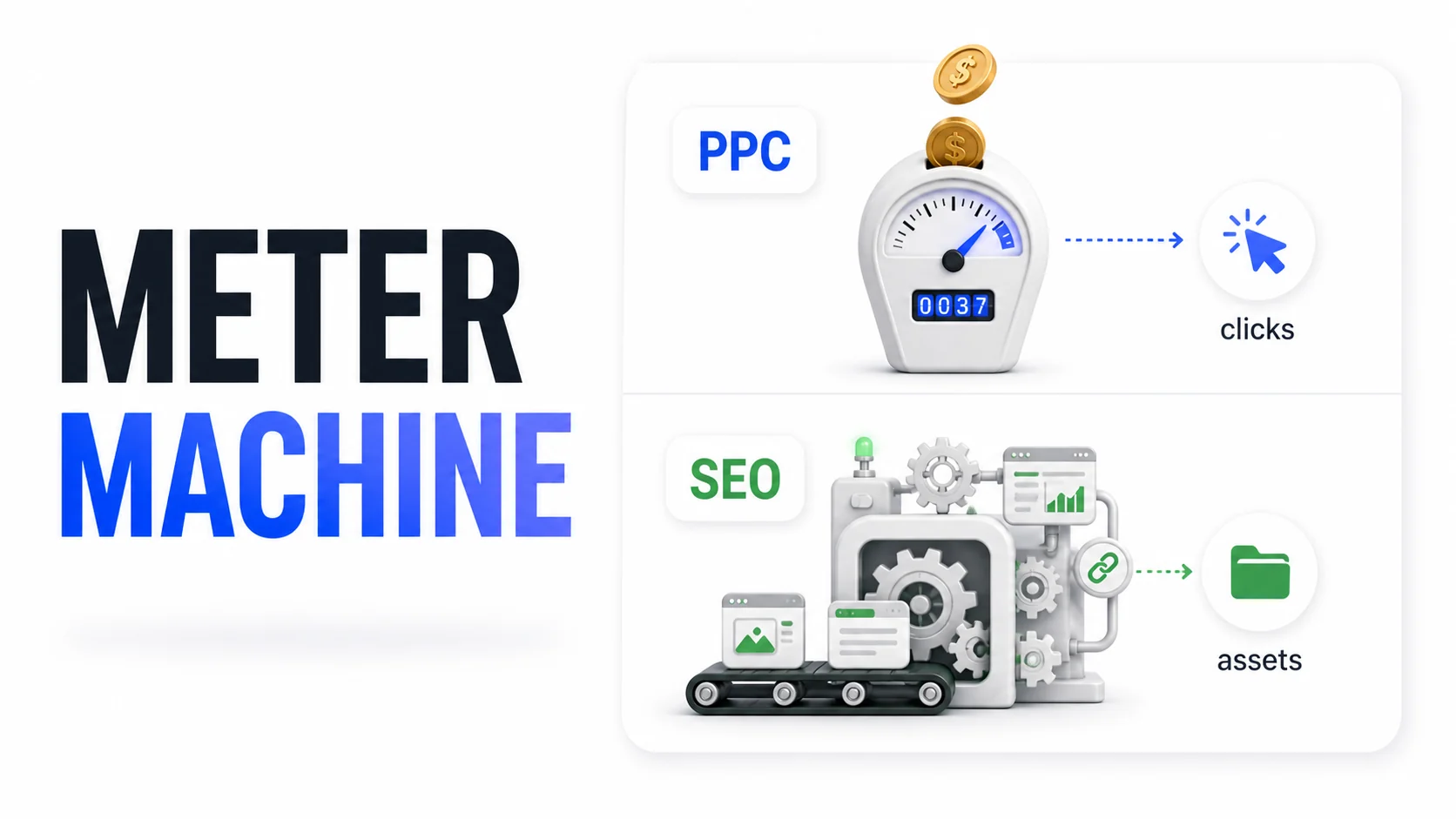
PPC is like putting money into a meter.
You pay for clicks. Those clicks generate data. Some convert, some do not. If the numbers work, you keep scaling. If the numbers do not work, you change the targeting, the bid, the landing page, or the economics of the business.
SEO is closer to building a machine.
You pay for research, technical cleanup, content, internal linking, authority, UX, reporting, and iteration. At first, the machine may produce very little. Later, if the work is good and the market allows it, those same pages can keep bringing traffic without you paying for each individual click.
That is why comparing SEO and PPC only by monthly cost is misleading.
A $3,000 PPC budget and a $3,000 SEO budget are not buying the same thing.
With PPC, most of that money buys traffic now. With SEO, most of that money buys future traffic-generating capacity.
That makes SEO easier to misunderstand.
If you want a more detailed breakdown of common SEO budgets, we have already covered how much SEO costs for a small business. But cost alone is not the real issue.
The real issue is how long that spend takes to teach you something useful.
The uncomfortable truth about PPC tests
Many PPC campaigns do not really fail.
They simply stop before there is enough data.
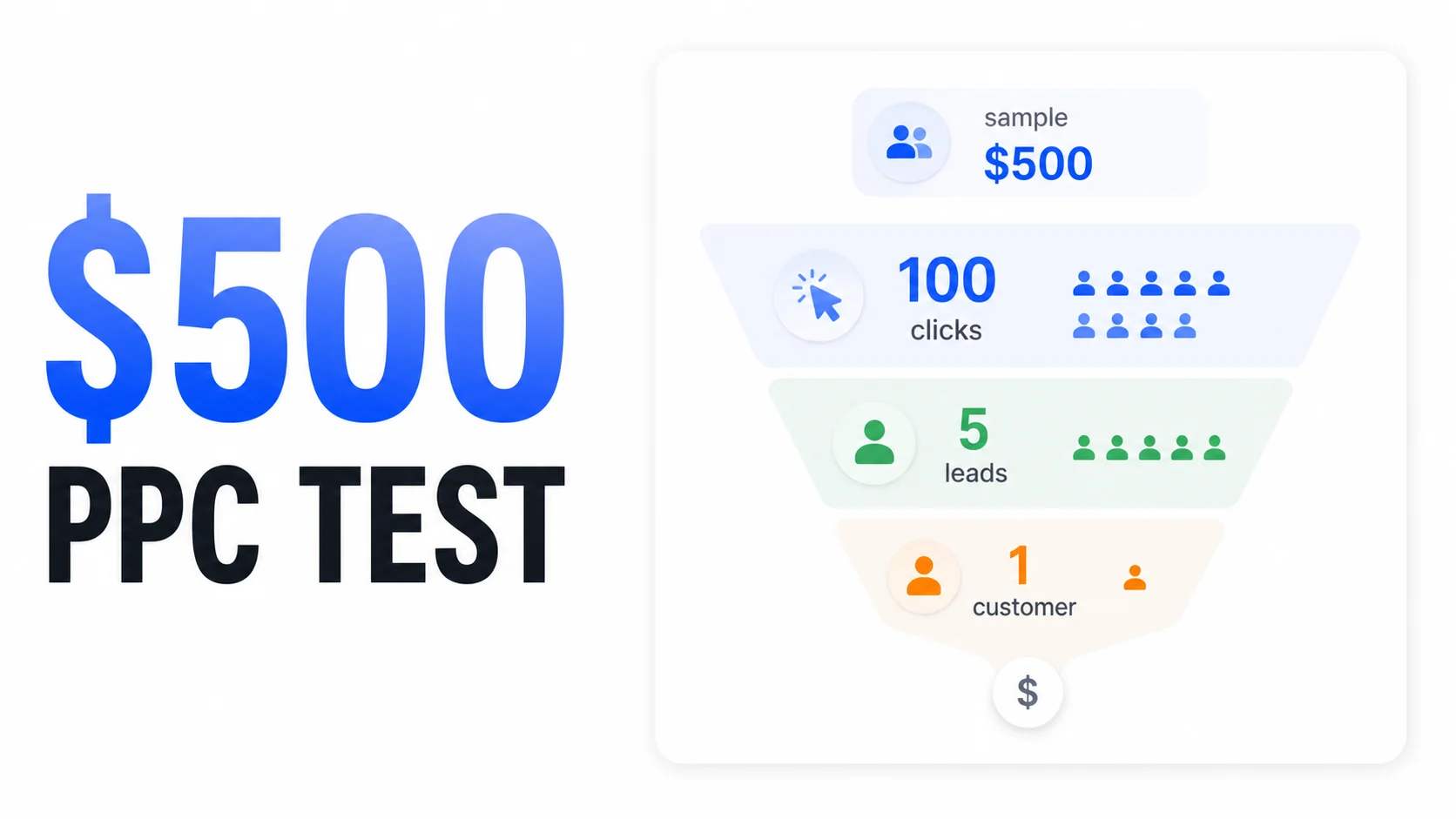
Suppose you spend $500 on Google Ads.
If your average cost per click is $5, that gives you roughly 100 clicks.
That may sound like a decent test. But if your landing page converts at 5%, that is five leads. If only some of those leads are qualified, and only some of them become customers, you may not even get one sale from that test.
So what did you learn?
Maybe the channel does not work. Maybe the landing page was weak. Maybe the keywords were wrong. Maybe the offer was unclear. Maybe the sales process failed. Maybe the sample was too small.
A small PPC test can feel prudent because it limits risk, but it can also produce useless data.
PPC is not only a way to buy traffic. It is a way to buy information. If you buy too little information, you may make the wrong decision.
The truth about SEO tests
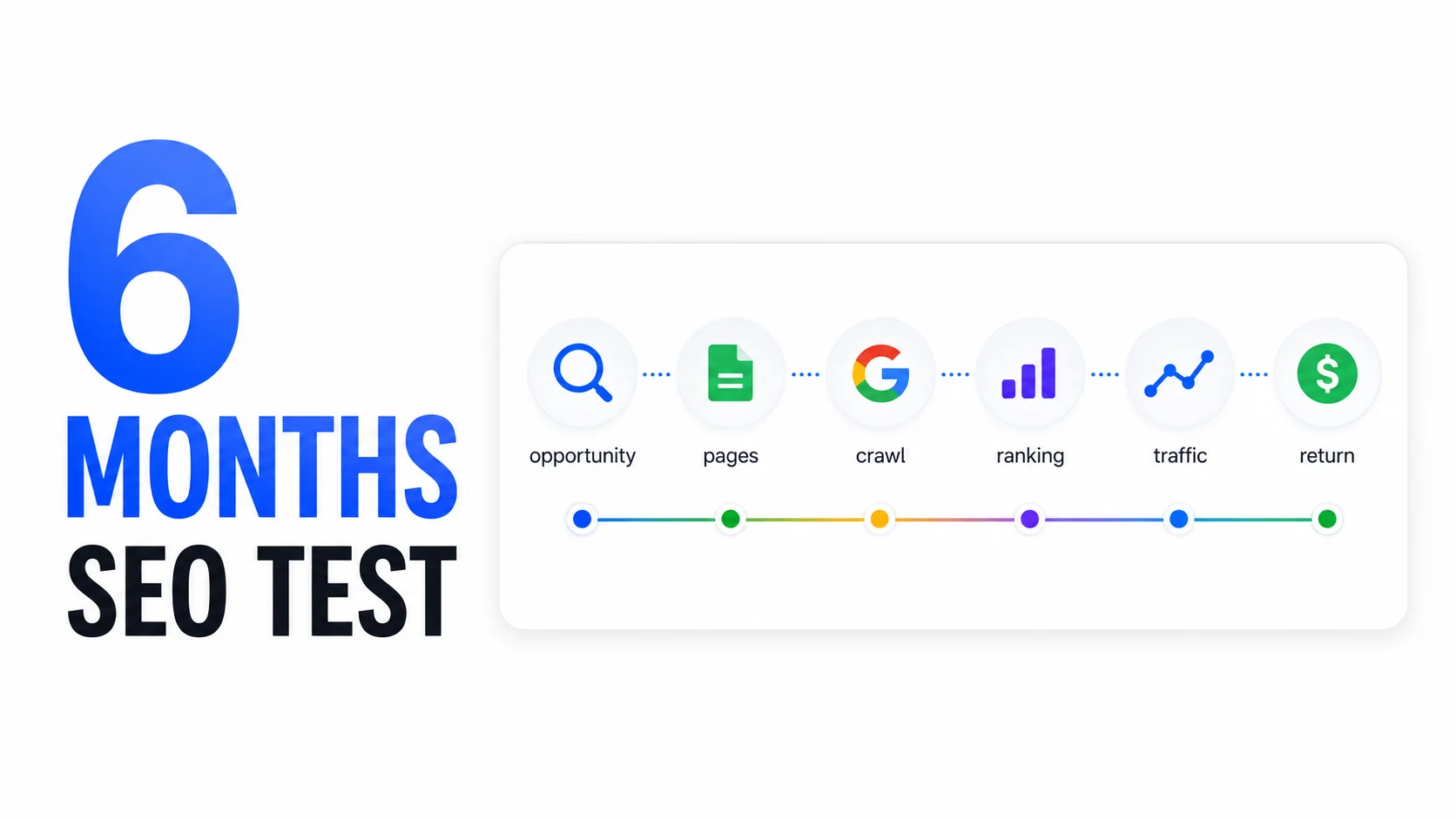
SEO has the opposite problem.
With PPC, you can spend money and see clicks immediately.
With SEO, you can spend money and see very little at first.
That does not automatically mean the work had no value. SEO rarely returns results in neat monthly blocks.
A serious SEO investment has to move through several phases.
You need to understand the market. You need to find the right opportunities. You need to improve or create pages. Google has to crawl and process those pages. Rankings have to move. Traffic has to arrive. Users have to convert. Only then can you judge the return.
That feedback cycle is much longer.
That is why one month of SEO rarely tells you much. In many cases, even three months is still early. For small businesses, a realistic SEO test is often closer to six months to a year. In competitive markets, it can take longer.
That does not mean SEO agencies should get unlimited time and budget without accountability. A good SEO report should still show what was done, what changed, what is improving, and what the next decision should be.
But expecting PPC-style feedback from SEO is a mistake.
SEO is an asset-building process.
So how much should you spend before expecting a return?
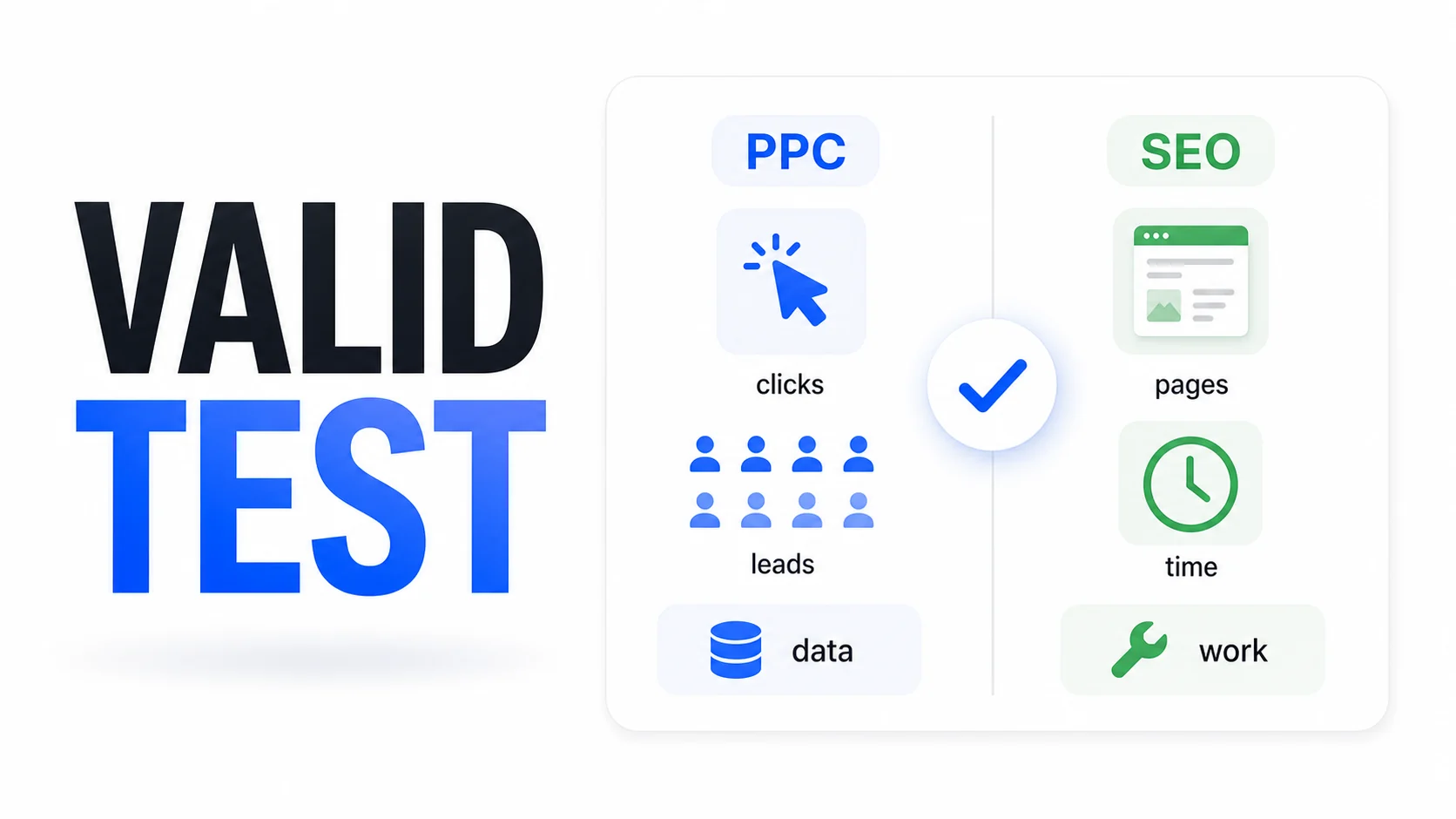
The answer is: enough to create a valid test.
That number depends on your market, margins, conversion rate, sales cycle, and the current state of your website.
But there is a practical way to think about it.
For PPC, you need enough budget to generate a meaningful number of clicks and leads.
For SEO, you need enough budget to create a meaningful body of work.
A PPC test with 30 clicks usually tells you almost nothing. An SEO campaign with one article usually tells you almost nothing.
Neither is useful.