

Listen to the short summary
If you want the key idea first, this short audio explains why local proof beats generic franchise location pages.
Franchise marketing has a strange problem.
On paper, it should be easier than marketing a small local business. You already have a brand, a website, a system, a recognizable offer, and several locations that can support each other.
But in practice, franchises often struggle with local visibility.
The reason is simple: Google does not rank “a franchise” in the abstract. It ranks specific pages, specific locations, specific business profiles, and specific answers to local searches.
A customer searching for “best gym near me” in Austin does not care that your franchise has 80 locations across the country. They care whether the Austin location looks trustworthy, close, active, well reviewed, and relevant to what they need right now.
That is where many franchise marketing strategies go wrong.
They think big brand first.
Google often thinks local proof first.
This is why a strong local SEO strategy matters so much for franchises with several locations.
Free franchise local visibility PDF
Use this checklist to review local pages, Google Business Profiles, reviews, local proof, and reporting across franchise locations.
The main challenge with franchise online marketing
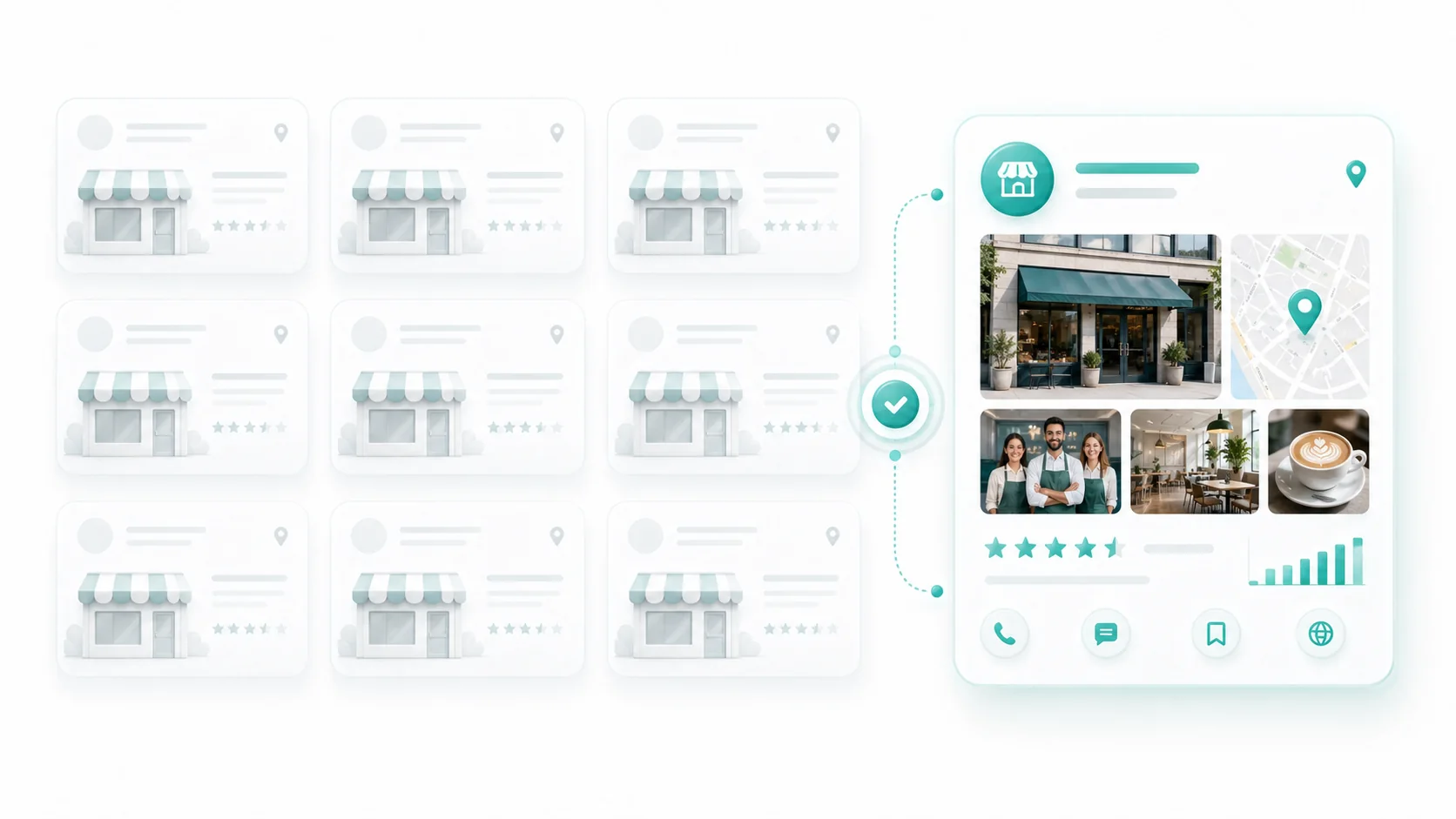
The biggest mistake in franchise marketing is treating every location as if it were the same business with a different city name.
You have probably seen pages like this:
Welcome to [Brand] in [City]. We offer professional [service] for customers in [City] and surrounding areas. Contact us today.
Technically, that is a location page.
But from a user’s point of view, it says almost nothing.
Who works there?
What areas do they really serve?
Do they have local reviews?
Is the offer the same as in other cities?
Are there actual photos from that location?
Can I trust this branch specifically?
This matters because local visibility is built on confidence. Google needs to understand that the location is real, active, relevant and useful. Users need to feel the same thing.
A franchise website can have a strong domain, but if each local page feels empty, generic or duplicated, the brand advantage is partly wasted.
Franchise local visibility calculator Use it to get a practical recommendation. Open tool
Franchise local visibility score calculator
Estimate how ready your franchise is to grow local visibility across locations, and see which system needs attention first.
Location readiness
Readiness score
This score is directional. It helps identify whether the bottleneck is website structure, Google Business Profiles, reviews, local content, tracking, or central execution.
Think of each location as its own small business

A better way to approach franchise online marketing is to treat every location as a small local business inside a bigger brand.
The brand gives authority.
The location gives relevance.
You need both.
The central website can explain who you are, what you offer and why the brand is trustworthy. But each location page has a different job: it has to prove that this specific branch is the right option for people in that area.
That does not mean writing 2,000 words for every city. In many cases, that would be artificial.
It means adding the details that make the location feel real: real photos, real opening hours, real reviews, real local team information, real services offered there, real nearby areas served, and real reasons to choose that branch.
Not more text for the sake of SEO. More proof.
That is the key difference.
In competitive local niches, this becomes even more obvious. Whether you are ranking a law firm, a clinic, a gym, or a franchise location, the page needs more than a city name. It needs proof that the business deserves visibility in that market.
The website structure should be simple

Franchise websites often become complicated too quickly.
There are location pages, service pages, city pages, state pages, blog posts, campaign landing pages, franchisee pages, and sometimes old pages nobody remembers creating.
A simple structure is usually better.
For example:
/locations/
/locations/florida/
/locations/florida/miami/
/services/
/services/commercial-cleaning/
If the franchise is large, you may need state or regional pages. If the business has strong demand for specific services in specific cities, you may need service-location pages.
But you do not need to create thousands of pages just because your CMS allows it.
That is one of the classic franchise SEO traps: confusing scale with value.
A page should exist because someone might search for it, land on it, and find it genuinely useful.
If the only difference between 200 pages is the city name, you do not have a local SEO strategy. You have a duplicate content problem.
A franchise website also needs a clean internal link structure. If important location pages are buried five clicks deep, Google may crawl them, but users and search engines will both treat them as less important.
Google Business Profiles matter as much as the website
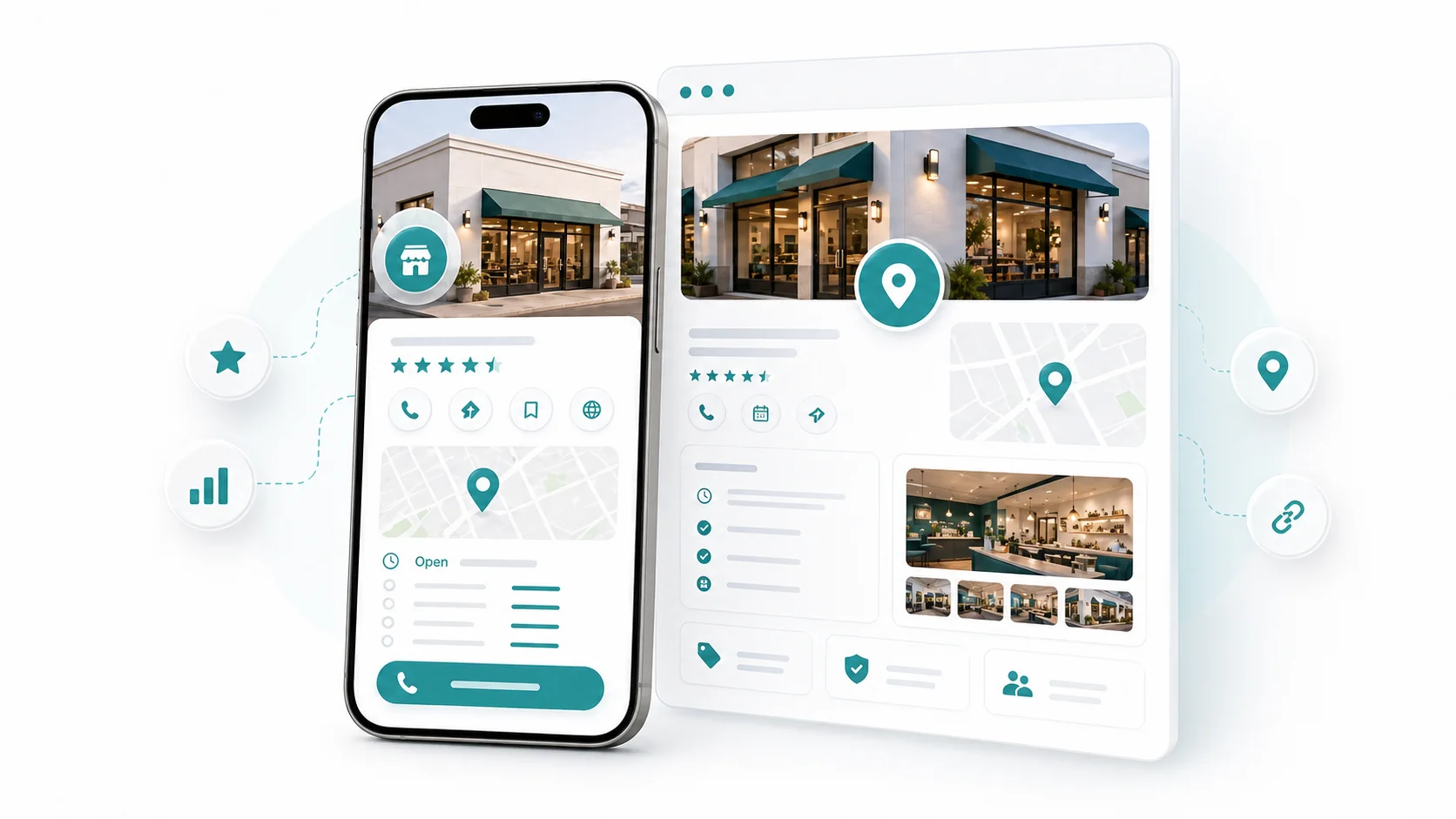
For many local searches, the first interaction does not happen on your website.
It happens through a Google Business Profile or in the local pack.
That means each location’s Google Business Profile is not a side task. It is one of the most important marketing assets of the franchise.
Each location’s profile should also follow Google’s own Google Business Profile guidelines, especially around business name, address, categories, opening hours and eligibility.
The profile should connect clearly with the location page on the website. If the Miami branch has a Google Business Profile, the website link should usually point to the Miami location page, not just the homepage.
That sounds obvious, but many franchises still send every location profile to the homepage.
The problem is that the homepage is usually too broad. It talks about the brand. The local profile needs a local destination.
A good location page and a good Google Business Profile should reinforce each other. Same address, same phone number, same opening hours, same core services, same local identity.
This helps Google connect the dots. It also helps users trust that they are dealing with the right branch.
This is especially important for franchises that work as service-area businesses. The same local logic applies to trades and home services, where service-area business SEO depends heavily on Google Business Profiles, reviews, service pages and local trust.
Reviews are not just reputation. They are local proof
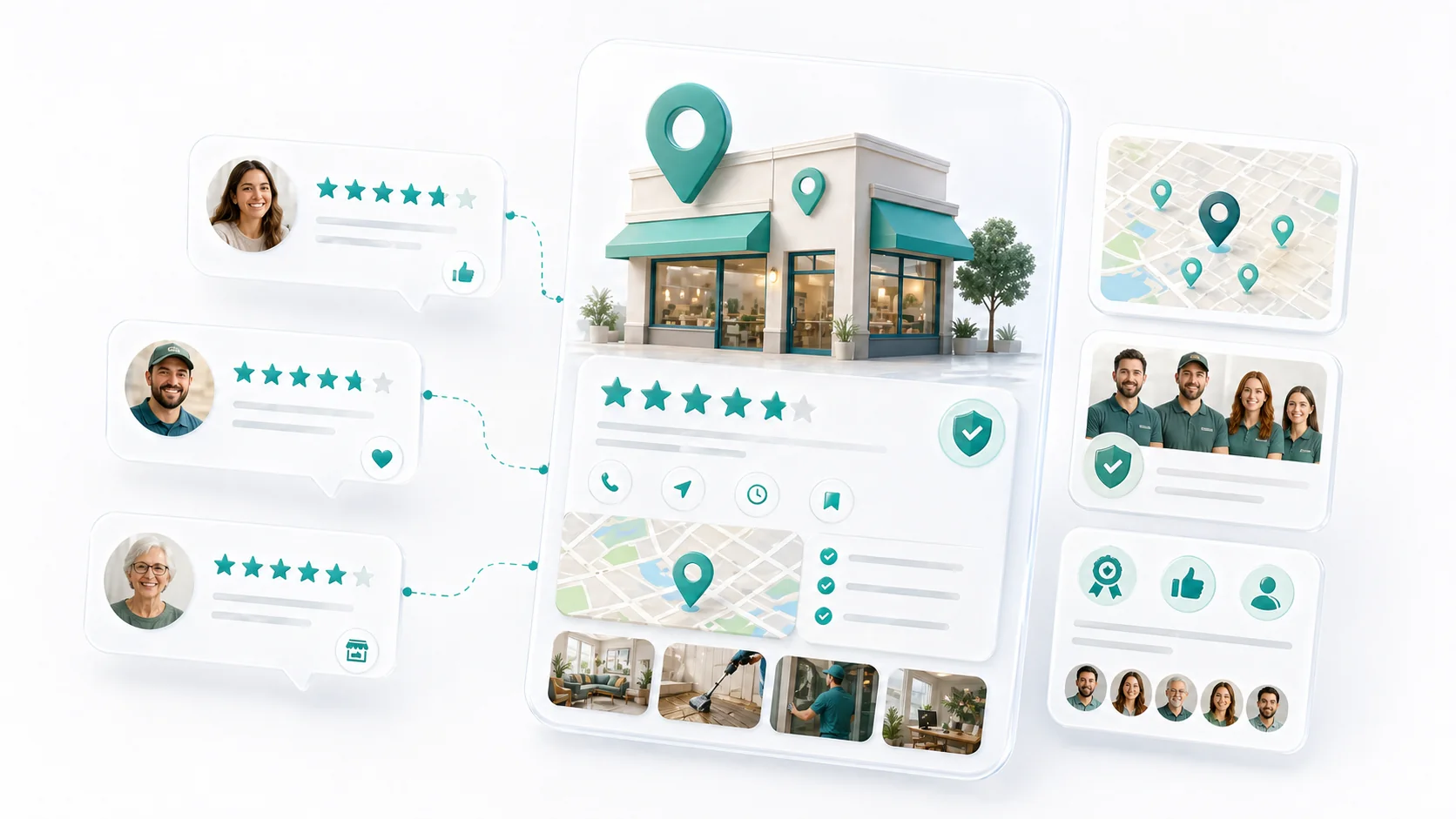
Reviews are often treated as a separate thing: reputation management.
But for franchises, reviews are also content.
They tell you what customers value in each location. They reveal the language people use. They show differences between branches. They provide local trust signals that a generic brand page cannot create on its own.
A review saying:
The Dallas team arrived the same day and fixed the issue quickly.
is much more powerful for the Dallas page than a generic sentence written by the marketing team.
The same applies to service-specific reviews. If several people mention emergency appointments, fast delivery, friendly staff, parking, cleanliness or pricing, those details can shape the way you present that location.
Good franchise marketing does not just collect reviews. It learns from them.
Local visibility is not only about having a page live on the website. Relevance, trust, content quality, reviews, and brand signals all interact with broader SEO ranking factors.
Local content should have a reason to exist

Many franchises make another mistake: they create local blog content just to keep every location “active”.
This often leads to weak articles like:
Why our Denver team loves serving the local community
There is nothing wrong with community content, but from an SEO point of view it usually has little demand and little value.
Local content works better when it behaves like genuinely helpful content, not like a template created only to capture city-name searches.
For example, how much a service costs in a specific city, what to know before booking in that area, common problems customers have locally, local rules or seasonal issues, comparisons between services, or guides for choosing the right provider.
The question should always be:
Would someone actually search for this?
If not, the content may still be useful for brand or social media, but it probably should not be the core of your SEO strategy.
The central team should create the system, not every word
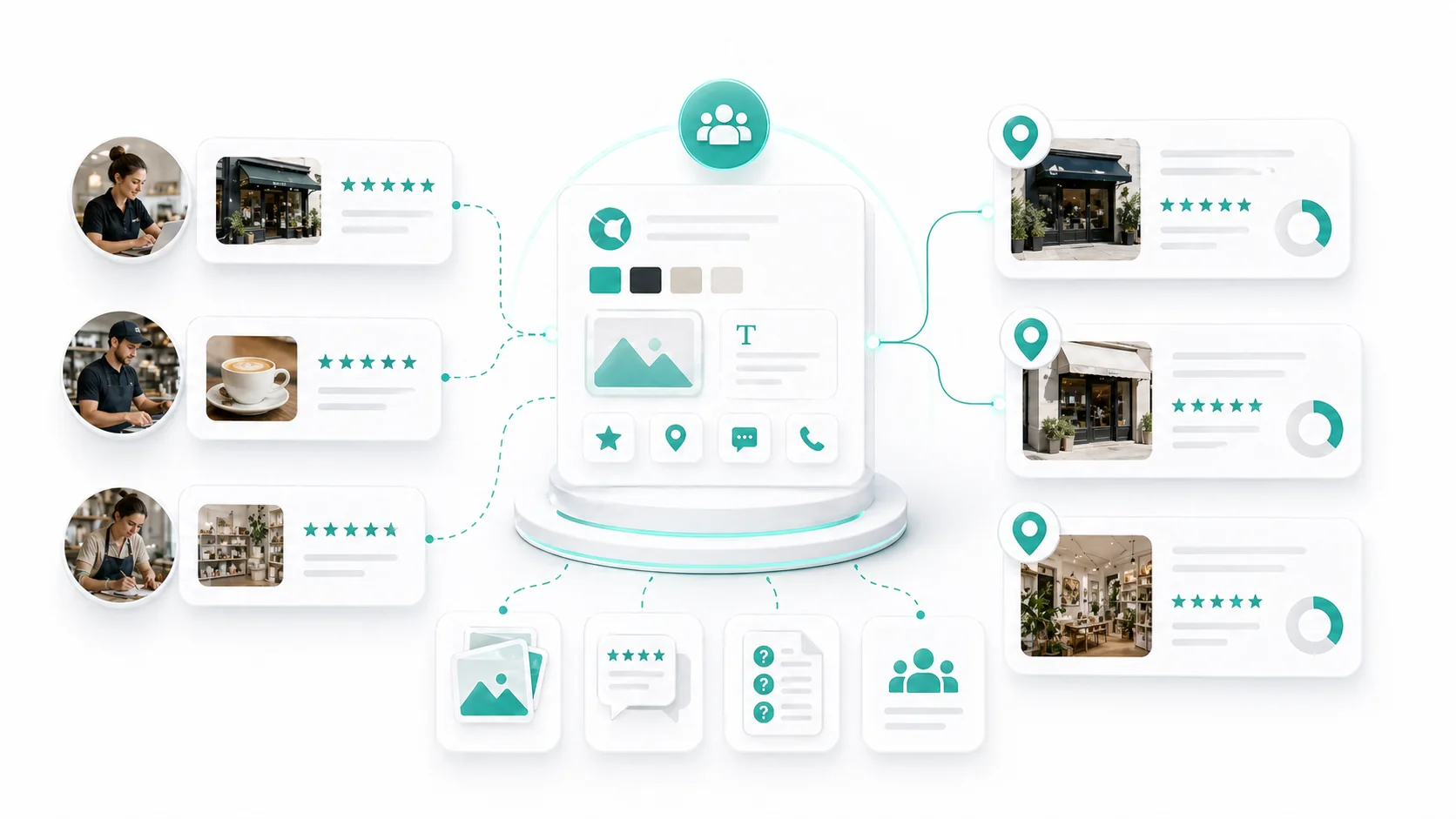
Franchise marketing needs control, but it also needs local information.
If the central team writes everything without input from locations, pages become generic.
If every franchisee writes whatever they want, the brand becomes inconsistent.
The best model is somewhere in the middle.
The central team should create the structure, templates, quality standards and SEO rules. The local teams should provide the raw material: photos, customer stories, local FAQs, service details, team updates and common objections.
That way, the website stays consistent without becoming empty.
You do not need every franchisee to become a marketer. You need a simple way to collect local proof from them.
For example, once a month, each location could answer a few basic questions:
What changed this month?
Any new photos?
Any new services?
Any common customer questions?
Any good reviews worth highlighting?
Any local offer or event?
That is enough to keep local pages alive without turning the process into chaos.
Not every franchise location needs the same work. Some need better reviews. Others need stronger pages. Others need cleaner tracking. Others may simply be in a harder market. Before doing more, the central team needs to understand its real SEO priorities.
Do not measure franchise SEO only at brand level
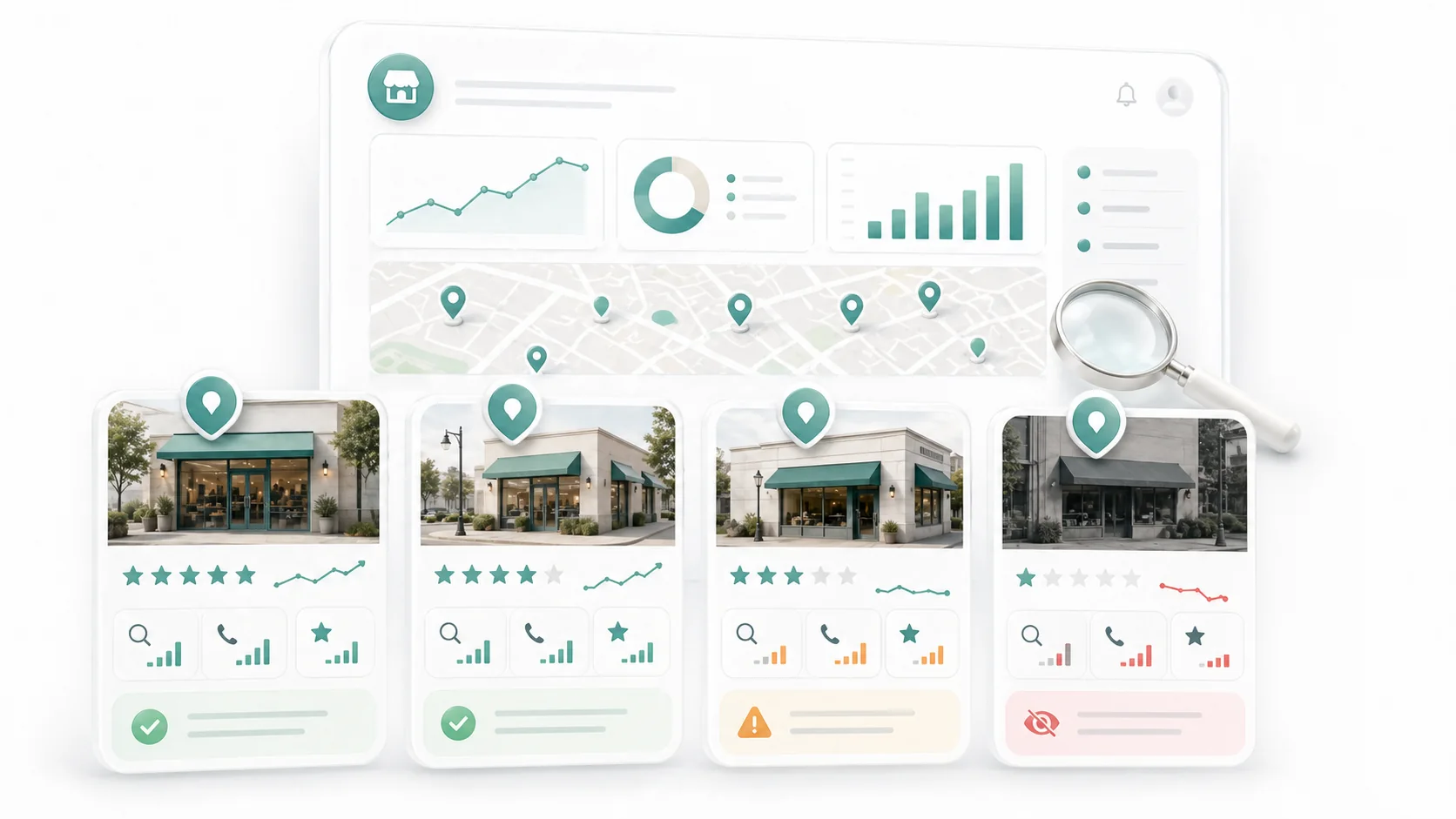
A franchise can grow overall while several locations are struggling.
That is why reporting only total organic traffic is misleading.
If organic traffic is up 20%, that sounds good. But maybe three big cities are carrying the whole result while ten smaller locations are invisible.
Franchise marketing needs location-level reporting.
Not necessarily a huge dashboard full of noise. Just enough to answer simple questions:
Which locations are getting found?
Which ones are getting clicks?
Which ones are getting calls or leads?
Which ones have weak reviews?
Which ones have pages that nobody visits?
Which ones are losing visibility to local competitors?
This is where reporting matters. A useful SEO report should not just say that organic traffic increased. It should show which locations are improving, which ones are stuck, and what should be done next.
One location might need better reviews.
Another might need a stronger page.
Another might need paid search while SEO catches up.
Another might have a tracking issue.
Another might simply be in a much more competitive city.
Franchise SEO is not one problem. It is many local problems under one brand.
For franchise owners, budget is usually part of the problem too. Understanding how much SEO costs helps separate useful local work from bloated retainers full of tasks that do not move the needle.
The simplest way to think about franchise online marketing
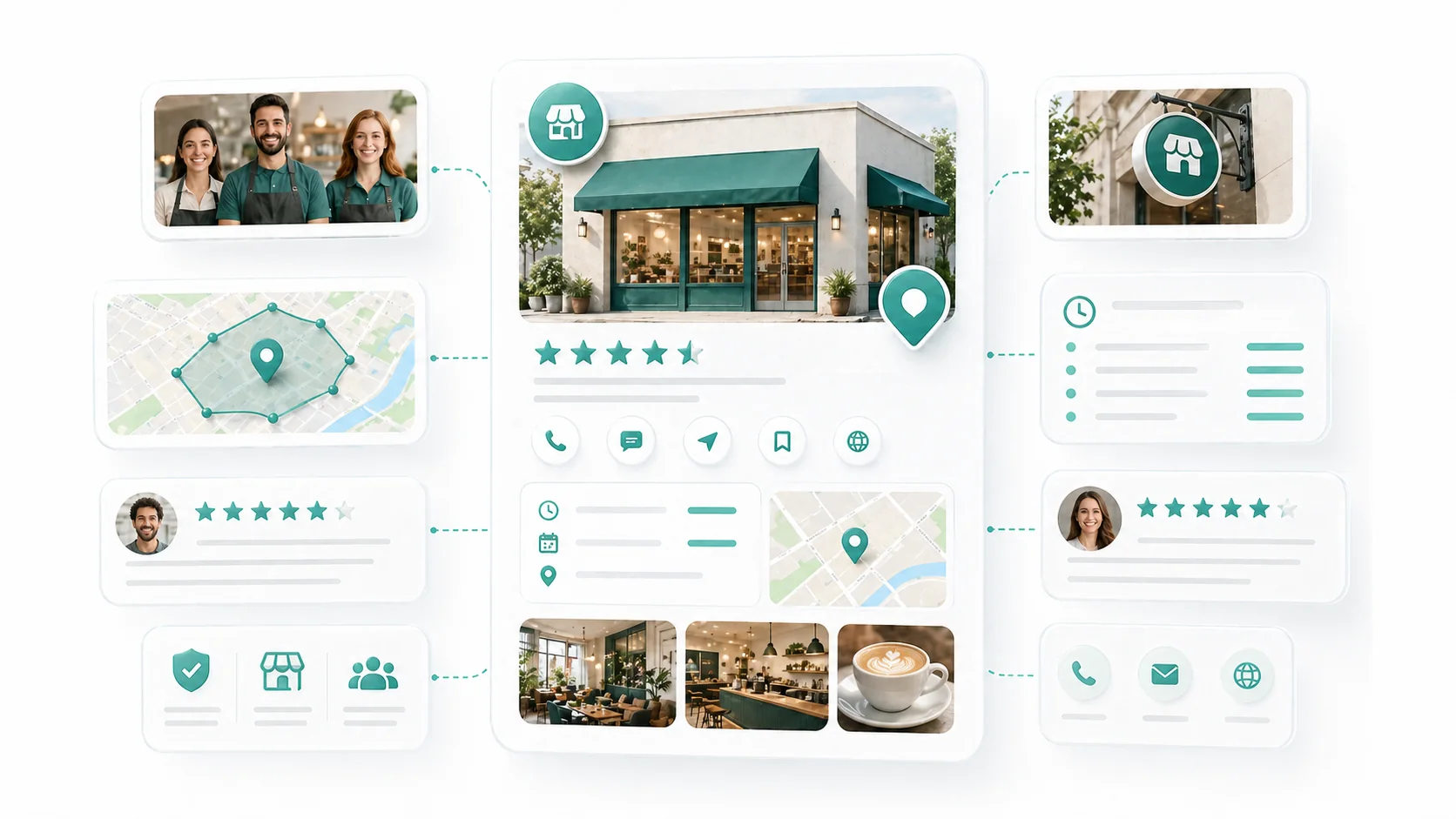
The goal is not to make every location page long.
The goal is to make every location believable.
A good franchise location page should make a user think:
Yes, this company actually serves my area, understands what I need, and looks like a trustworthy option.
That is the whole game.
You can get there with better website architecture, Google Business Profile optimization, reviews, local photos, service details and useful local content.
But the principle is simpler than the tactics:
Generic pages do not win local trust.
Real local proof does.
Final thoughts

Franchise online marketing is difficult because it has to balance two opposite forces.
The brand needs consistency.
The locations need individuality.
If everything is centralized, local pages become generic. If everything is local, the brand becomes messy.
The best franchise marketing systems combine both.
They use the strength of the brand, but they do not forget that local customers are choosing a specific branch, in a specific city, for a specific need.
That is why local visibility does not come from adding city names to templates.
It comes from proving that each location is real, active, useful and trusted in its own market.
For franchises, that is the difference between simply having many locations and actually being visible in all of them.